Kenya’s new draft Artificial Intelligence and Emerging Technologies Policy is open for public consultation, and it is not the kind of light-touch,...
Kenya’s new draft Artificial Intelligence and Emerging Technologies Policy is open for public consultation, and it is not the kind of light-touch, wait-and-see document most African governments have published on AI so far. It transcends Kenya’s borders, builds two new regulatory institutions from scratch, and tries to answer a question most AI policy on the continent still dodges: who actually pays for all this, and who gets protected from it?
Major Highlights
Extraterritorial reach: the policy applies to any company outside Kenya, OpenAI and Meta included, whose AI systems produce outputs used in Kenya or have a direct, foreseeable effect on people there. Being headquartered abroad no longer puts a company out of reach.
Mandatory disclosure: Kenyan companies will have to tell customers when they’re interacting with an AI system, giving individuals a formal right to know when an algorithm, not a person, is acting on them.
Shared liability: developers, deployers, operators, vendors, and users will all carry legal responsibility for an AI system’s harms, with future legislation to spell out how liability, insurance, and redress get allocated across that chain.
Two new institutions: the Kenya AI Safety Institute (KAISI) will handle model testing, red-teaming, benchmarking, and incident tracking, alongside a public AI and Emerging Technologies Registry and mandatory registration for high-risk AI applications.
A compute lifeline for locals: the National AI Compute Access Programme is designed to stop local startups, researchers, and public institutions from being priced out of AI, including a push to reclassify GPUs and AI accelerators as tax-exempt educational equipment across the East African Community.
The uncomfortable backdrop: Microsoft and G42’s roughly $1 billion Kenya data-centre project, announced back in May 2024, remains stalled over unresolved negotiations on government payment guarantees for capacity.
KINI BIG DEAL?
If you build, sell, or deploy AI touching Kenyan users, the compliance clock just started. Foreign AI providers, OpenAI and Meta included, now face real registration, disclosure, and liability requirements instead of operating on guidance alone, while Kenyan startups get a genuine lever to compete: cheaper GPU access through the new compute programme rather than having to out-fund Big Tech.
One catch worth watching: the policy assumes local compute infrastructure that doesn’t fully exist yet. Kenya’s own $1 billion Microsoft-G42 data centre has sat stalled for over a year on funding talks, so “accessible compute” is still a promise more than a delivered reality.
Lagos is getting more serious about preparing its young people for an AI-powered economy. On August 10, the Lagos State Employment Trust...
Lagos is getting more serious about preparing its young people for an AI-powered economy.
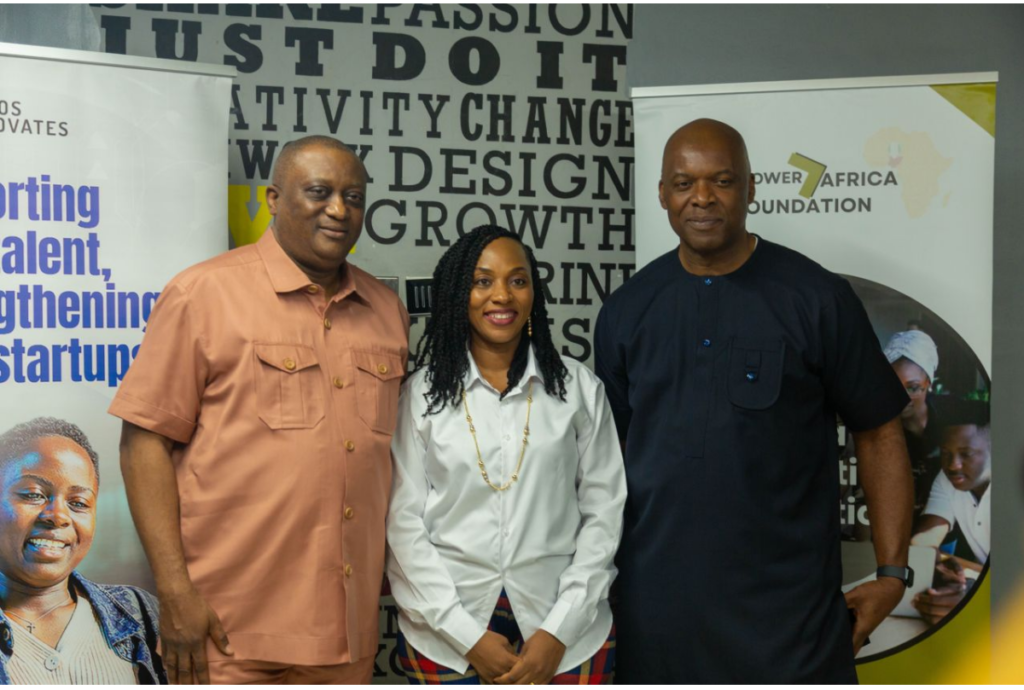
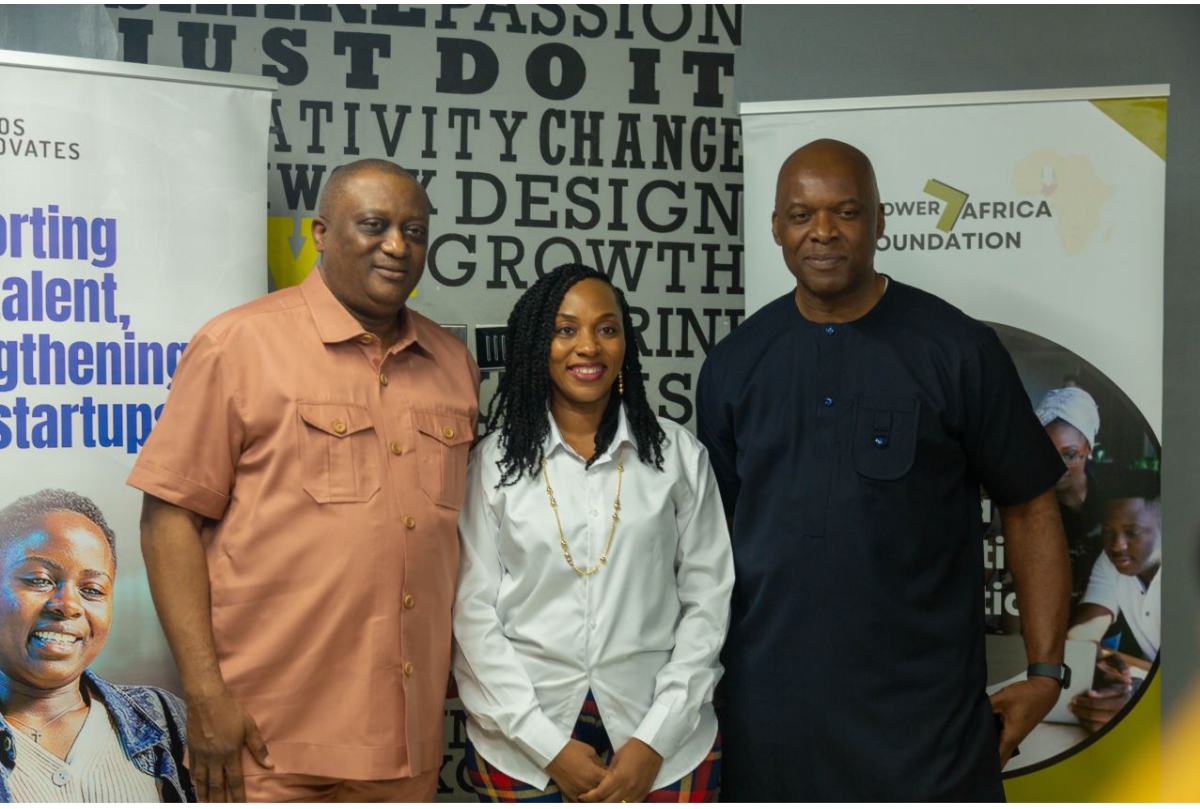
On August 10, the Lagos State Employment Trust Fund (LSETF), in partnership with InnoPower Africa, launched EkoAI Academy, a programme that aims to train 10,000 young Lagosians in artificial intelligence. The programme is designed to give participants practical AI skills that can be applied to employment, entrepreneurship and other opportunities emerging as AI changes the way people work.
Now, while AI training programmes are hardly new, the scale and timing of this one are worth paying attention to.
10,000 young Lagosians are expected to benefit from the EkoAI Academy programme.
The programme is a partnership between the Lagos State Employment Trust Fund (LSETF) and InnoPower Africa.
Training will focus on practical AI skills and their application to employment and entrepreneurship.
EkoAI Academy joins a growing number of African initiatives focused on developing AI skills and supporting AI innovation.
Other recent opportunities across the continent have targeted AI startups, students and researchers, suggesting a broader push to build African participation in the AI economy.
KINI BIG DEAL
The interesting thing about EkoAI Academy isn’t just that 10,000 Lagosians are about to learn AI. It’s that they’re joining a growing queue of opportunities for Africa to participate in the AI economy.
These opportunities are appearing in different forms. Google’s 2026 Accelerator programme in South Africa, for example, is supporting AI-focused startups with technical mentorship, resources and funding. In East Africa, the AI4EAC Innovation Challenge has allowed university students to develop AI solutions to real-world employment problems. Research initiatives are also creating opportunities for African researchers to investigate how digital technologies can be applied to problems on the continent.
These programmes are different in their objectives and scale, but there is a common thread running through them; they are creating pathways for Africans to participate in AI rather than simply consume it.
For much of the technology industry’s history, Africa has often occupied the position of the end user. A technology is developed elsewhere, launched globally, and eventually adapted for African markets. But artificial intelligence has the potential to be different.
EkoAI Academy is a fore-running catalyst for making that difference. You need people who understand AI before you can have people building AI startups. You need people who can identify useful applications before companies can develop them. And you need a large enough pool of digitally skilled people before an ecosystem can really take off.
Of course, training 10,000 people doesn’t mean Lagos is suddenly going to produce 10,000 AI engineers, and completing an AI course doesn’t automatically translate into a job or a successful business.
There’s still the much bigger problem of infrastructure, affordable internet, access to devices, funding and actual economic opportunities. But the opportunity for Africa to build things with AI is becoming harder to ignore.
INTERPOL’s latest cybercrime report has one headline everybody’s repeating: AI is now linked to 55% of reported cybercrime across Africa. But that’s...
INTERPOL’s latest cybercrime report has one headline everybody’s repeating: AI is now linked to 55% of reported cybercrime across Africa.
Drawing on intelligence from law enforcement agencies across 36 African countries, the report paints a worrying picture of cybercrime on the continent. It found that 72% of surveyed countries reported the presence of scam centres; organised operations behind phishing attacks, investment fraud, romance scams and other online crimes. Cybercrime-related losses, meanwhile, jumped from $192 million in 2024 to $484 million in 2025.
Those numbers raise an obvious question: how we take reach here?
Source: SecurityWeek
The answer becomes clearer when you look at what happened to AI over that same period.
Just two years ago, AI was mostly synonymous with chatbots. Fast forward to today, and it can generate realistic images, clone voices, create convincing videos, browse the web, reason through complex tasks and even complete them on your behalf through AI agents.
At the same time, competition among companies like OpenAI, Google, Anthropic and others made these tools dramatically cheaper and more accessible.
That changed everything. Businesses started automating customer support. Developers began building products faster. Creators found new ways to bring ideas to life. Students gained personalised tutors that could explain almost anything on demand. AI became part of everyday life.
As the saying goes, a rising tide lifts all boats. Unfortunately, that includes the pirate ships too.
The same capabilities helping businesses move faster are also helping 419 people move smarter. AI can write convincing phishing emails, clone voices well enough to impersonate family members, generate fake documents and produce deepfake videos that are increasingly difficult to distinguish from the real thing. According to INTERPOL, AI-powered phishing, deepfake-enabled fraud, synthetic identities and AI-assisted sextortion are now among the fastest-growing cybercrime tactics across the continent.
AI, however, is only one part of INTERPOL’s findings.
The report also points to fragmented cybercrime legislation, uneven law enforcement capabilities and slow cross-border cooperation as major reasons organised cybercriminals continue to thrive. Many agencies across the continent still lack the tools and AI readiness needed to investigate increasingly sophisticated attacks, creating gaps that criminals are quick to exploit.
Note that INTERPOL itself isn’t sitting on the sidelines, either. In the past year alone, four coordinated operations — including Operation Serengeti 2.0 — led to more than 1,500 arrests and recovered over $100 million in stolen funds across the continent. That’s a massive disruption, yet it wasn’t enough to stop the massive losses suffered. If anything, it’s a sign of how much ground law enforcement is trying to make up.
KINI BIG DEAL?
It would be easy to read this report and conclude that AI is making Africa less safe online.
A better way to think about it is this: AI is making EVERYONE more capable.
For businesses, it means doing more with fewer resources. For developers, it means building products in days instead of weeks. For creators, it means producing work that once required entire teams. For students, it means having a tutor that’s available whenever they need one.
Unfortunately, those same capabilities are making cybercriminals more capable too.
Recently, in The Illusion of Reality, we explored how AI is making it harder to tell what’s real from what’s generated. INTERPOL’s latest report shows that this isn’t just an internet thought experiment anymore.
The phishing email that looks unusually convincing. The voice note that sounds exactly like someone you know. The video that seems too real to question. Those are no longer distant possibilities; they’re officially part of the cybercrime playbook.
Not only does the illusion of reality make fake content more believable; it also makes all of us more vulnerable to believing it.
This isn’t just something to armour yourself against alone. Every person who falls for one of these scams makes the next one more convincing, more profitable, and more likely to keep spreading. Staying alert to what’s real and what isn’t is starting to look less like personal caution and more like a responsibility we owe each other.
AI made all of us more capable. Now we need to get more careful, together.
We recently told you about Refiant AI, the South African startup that quietly made Google and Anthropic look stingy with their memory. Google is back in the story again, except this time it’s writing cheques.
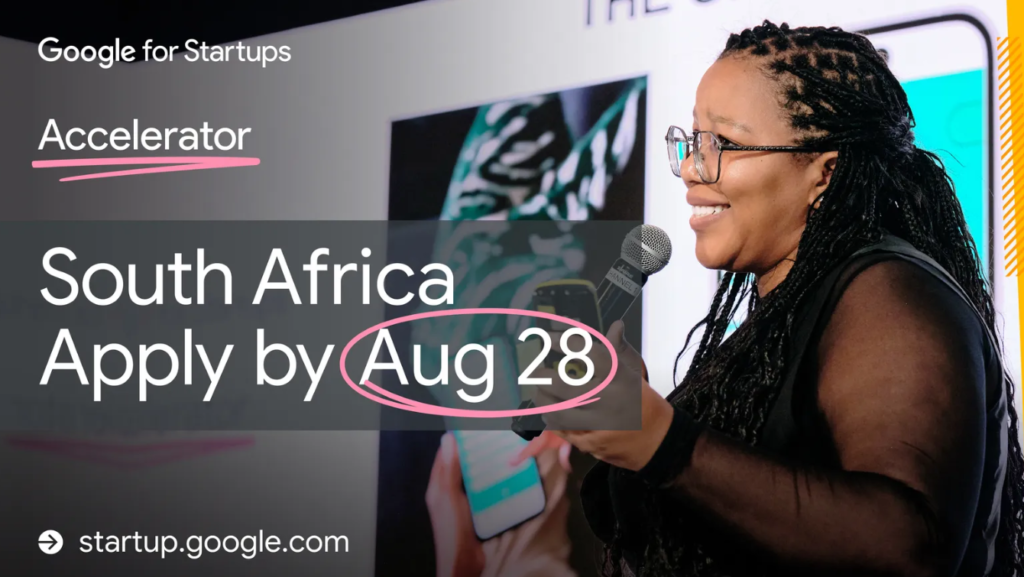
Applications are officially open for the 2026 Google for Startups Accelerator South Africa, and Google is backing 15 growth-stage, AI-driven startups with non-dilutive funding, hands-on access to its AI tools and cloud infrastructure, and mentorship to help them build for the local market. The announcement turns into action what James Manyika, Google’s Senior Vice-President of Research, Labs, Technology and Society, teased at the Google Cloud Summit in Johannesburg, and it’s one instalment of a bigger promise: Google wants to support 50 South African startups between 2024 and 2028.
Here’s what the 15 selected founders walk away with:
Cash, no strings: Up to R1 million per startup (roughly $60,000 at today’s rate), and Google takes zero equity. Founders keep full ownership and can put the money straight into hiring and shipping.
The good tech stack: Direct access to Google’s AI tools, cloud infrastructure, and models, including hands-on access to Gemini. Same rails Google runs at scale, not a watered-down version.
South Africans first: Google is explicitly prioritising South African-led startups that are Historically Disadvantaged Person (HDP)-owned or controlled: a South African policy term for businesses majority-owned by people who were denied economic opportunity under apartheid. The bar is also technical: you need a functional, AI-driven product already shipping for local market realities, not a slide deck.
Real mentorship, not a webinar: A three-month hybrid programme running 28 September to 4 December 2026, with each founder paired one-to-one with mentors and AI specialists on product, data and operational problems. Graduates join a network of 25+ local alumni plus the global Accelerator community.
Since the Africa programme launched in 2018, it has backed 190+ startups across 17 countries, and those companies have collectively raised over $400 million and created 3,500+ jobs, backed by $5 million in equity-free funding and product credits from Google. That’s not a pilot anymore; that’s a track record.
“We’re backing South Africans building for South Africa, because they read this market better than anyone,” said Siya Madikane, Google’s Communications & Public Affairs Manager for Africa. “When these companies grow, they hire here, and they prove that AI built on the continent can compete anywhere.”
Applications close 28 August 2026; that’s just over three weeks from today. If you or someone in your network has a working AI product and South African roots, the form is atstartup.google.com/programs/accelerator/south-africa.
Kini Big Deal? (Why Does It Matter?)
Put plainly: this is up to R15 million ($900,000-ish) landing in African-built AI companies with zero dilution attached. For founders who’d otherwise be giving up 10-20% of their company for a fraction of that in a seed round, “no equity” is not a small line item. It’s the whole pitch.
It also lands right after last week’s story about Refiant proving African teams can out-engineer Silicon Valley on the model layer itself. A pattern is emerging: Big Tech isn’t just watching African AI from a distance anymore; it’s actively trying to fund the winners before someone else does. Google name-checking “AI built on the continent” isn’t charity language; it’s a company trying to get a stake in outcomes it can’t fully control.
Now the dose of realism, because every gift horse deserves a look in the mouth. This is South Africa only, no wahala for Nigerian, Kenyan or Ghanaian founders reading this: Google’s broader Africa Accelerator has run cohorts elsewhere before, but this specific R1-million pot has a South African passport requirement built in. Fifteen slots is also a needle’s eye: expect hundreds of applications chasing them, and the HDP-ownership and already shipping bars will filter out a lot of very good ideas that just aren’t far enough along yet. And R1 million, while real money, covers a few months of runway for a team with engineers on payroll. This is a launchpad, not a retirement plan.
Still, equity-free capital, real infrastructure access, and a straight line to Google’s mentorship bench is a genuinely rare combination. If you know a South African founder building something real in AI, forward them this update today; the clock on 28 August doesn’t wait for a second look!
Eight months ago, Fusepay’s whole pitch was simply to get Seychelles’ trade businesses off paper ledgers and WhatsApp receipts and onto digital...
Eight months ago, Fusepay’s whole pitch was simply to get Seychelles’ trade businesses off paper ledgers and WhatsApp receipts and onto digital payments. This week, the company said the otherwise quiet part out loud: payments were never the endgame. Fusepay just launched Fuse360, an AI-native operating system built to let software, not people, run the daily grind of wholesale and distribution businesses.
━━━━━━━━━━━━━━━━━━━━━━━━━━━━━━━━━━
What’s Actually New Here
Fuse360 pulls inventory, order processing, invoicing, customer credit, collections and retailer relationships into one platform, with FusePay still handling the money movement underneath. But the bundling is hardly the crux of the matter. It is rather the extra layer on top of it: AI agents doing reconciliation, collections, credit monitoring and reporting automatically, instead of a business owner doing it manually at 11 pm.
The reason this is possible at all comes down to data access. The AI is built into the platform itself rather than bolted onto it from outside, giving it direct visibility into invoices, inventory movement, payment history, and supplier records in one place. No exporting a spreadsheet from one app to feed a chatbot in another. The agent already sees everything it needs to act.
━━━━━━━━━━━━━━━━━━━━━━━━━━━━━━━━━━
Major Highlights
Fusepay launched Fuse360, an AI-native operating system for trade businesses, eight months after debuting its FusePay digital payments platform in Seychelles.
Fuse360 bundles inventory, order processing, invoicing, customer credit, collections and retailer relationships into one platform; AI agents automate reconciliation, collections, reporting and credit monitoring.
Because the AI sits inside the platform itself, it has direct access to invoices, inventory movement, payment history and supplier records; no shuttling data between apps.
Founded by Thiyagarajan and Francesco Rocchi, Fusepay raised $350,000 in pre-seed funding in August 2025.
Fuse360 launched in Seychelles this month, expands to Mauritius in September, then selected East and Southern African markets later this year.
It enters a market already served by global ERPs like Odoo and SAP Business One, and African players like Bumpa and Sabi; Fusepay’s bet is specialising for trade businesses rather than building general-purpose software.
Africa has an estimated 244 million businesses and $1.5 trillion in merchandise trade (2024), with AfCFTA deepening cross-border commercial activity across the continent.
━━━━━━━━━━━━━━━━━━━━━━━━━━━━━━━━━━
KINI BIG DEAL
Every fintech that started out taking a cut of transactions is now racing to become the AI layer that runs the business generating those transactions. That’s the real story in Fuse360. The bet is that owning the operational data an AI agent needs to actually be useful is the durable business. Without that data layer, an AI agent is just a chatbot without context. With it, the agent becomes something a business owner can actually hand real work to.
That bet is especially consequential in Africa. The continent’s invisible middle — wholesalers and distributors too large for informal tools but too small for enterprise software — has been underserved by traditional banking and pricey ERP systems for years. With an estimated 244 million businesses and $1.5 trillion in merchandise trade still running largely on paper and instinct, AI agents wired directly into inventory and payments could skip an entire generation of manual digitization, going straight from spreadsheets to autonomous agents handling the reconciliation nobody wanted to do anyway.
It’s also not an isolated bet. The same week Fuse360 launched, Native — a company that describes itself as the operating system for offline trade — acquired a market-intelligence firm specifically to build its own AI data layer across 14 African markets. Two funded companies, on different sides of the continent’s trade economy, converging on nearly identical AI-first language in the same seven days. When that many serious players move at once, it’s usually because they’re all reading the same signal: the door to AI-run trade operations just opened, and nobody wants to be the one still knocking on it next year.
The real race here won’t be won on who has the flashiest model. It’ll be won by whoever owns the data pipe the AI depends on to act. Fusepay just showed its hand on which pipe it’s betting on.
Native, the agentic intelligence company that describes itself as building the operating system for offline trade, hasacquired Frontline Research Group, a market-intelligence firm with market-share panels across 14 African markets and clients that include AB InBev, Coca-Cola, Heineken, Diageo, Pepsi and Unilever. It’s Native’s first move into Africa, after building its platform serving Latin America’s fragmented consumer markets.
Native’s existing products help consumer goods brands see and act inside fragmented, physical trade environments. What they’ve been missing is a reliable way to measure whether any of it actually worked. Frontline’s independent market-share data is meant to close that loop.
Major Highlights
Native acquired Frontline Research Group, extending its operating system for offline trade platform from Latin America into Africa for the first time.
Frontline brings independent market-share data across 14 African markets, serving AB InBev, Coca-Cola, Heineken, Diageo, Pepsi and Unilever.
Africa’s consumer economy moves roughly $1.7 trillion a year, with about 80% flowing through traditional trade; more than 10 million analog stores that have historically been near-impossible for global brands to see, measure or act on.
Frontline CEO Sean Barnes becomes Native’s Chief Strategy Officer once the deal closes; financial terms were not disclosed.
Native’s pitch: pairing Frontline’s ground-truth data with its 3D Store Graph and agentic workflows closes the loop from action (what a brand does in-store) to outcome (whether market share actually moved).
KINI BIG DEAL
A pattern has emerged from this and Seychelles’ Fusepay launching their AI operating system. Both companies are placing the same bet on opposite sides of the same economy: Fuse360 helps the wholesaler run their own business better; Native helps the global brand see what’s happening on the 10 million shelves it can’t visit. Different customers with the same underlying wager that AI agents are only as good as the ground-truth data feeding them, and Africa’s offline trade economy has never had much of that data to give.
That’s precisely why this deal is worth watching. Africa’s informal retail sector has always been the blind spot for global consumer goods companies: too fragmented to survey at scale, too cash-based to track through digital payment rails, too vast for any single fieldforce to cover on its own. Frontline solved that the slow, expensive way — human field agents, in 14 markets, over years. Native is betting that data like that is now the scarcer resource, more valuable than the AI models sitting on top of it, precisely because you cannot scrape or infer what’s happening inside a shop that has no digital footprint at all.
As agentic AI in commerce gets commoditised — every vendor claiming some version of “AI that sees your stores” — the real moat shifts to whoever owns clean, verified ground truth in the markets everyone else finds too hard to measure. Africa’s informal economy has quietly been sitting on that advantage for decades. This is the first time it’s being bought and sold at this scale, and it almost certainly won’t be the last.
Applications are open for Cohort Two of the Bosun Tijani Foundation’s Gen AI Fellowship, a six-month programme designed to move young Nigerians...
Applications are open for Cohort Two of the Bosun Tijani Foundation’s Gen AI Fellowship, a six-month programme designed to move young Nigerians from casual users of generative AI tools into people who can actually build products with them. Unlike a classroom course, the fellowship leans on mentorship and hands-on projects, and this cohort keeps that same formula that trained more than 80 fellows in 2025. If you’ve been looking for a structured way into AI beyond tutorials and X threads, applications close July 31, and training begins in September.
Major Highlights
Applications for Cohort Two are open now and close July 31, 2026, with training starting September 1 in Abeokuta, Ogun State, and Kano.
The fellowship offers two tracks: AI Engineering and AI Application Development.
Selected fellows receive a monthly stipend of ₦50,000 for the duration of the programme.
Shortlisted candidates will be contacted for interviews between August 3 and 15 following the application deadline.
Training is delivered in person in Abeokuta and Kano — applicants need to plan for consistent physical attendance before applying.
Cohort One trained over 80 fellows in 2025 using the same mentorship-and-projects model; Cohort Two builds directly on that formula.
A year or two ago, most of what got published under “Nigeria and AI” was strategy — the National AI Strategy document, a governance bill still sitting unsigned after missed deadlines. What’s happening now, at least in this corner of the ecosystem, is a shift from writing the plan to staffing it; who is actually being trained, by whom, and to build what.
That shift only works if both ends of the pipeline hold. The government’s 3 Million Technical Talent programme is built for scale: millions of Nigerians getting exposed to digital skills. This fellowship is built for depth; a few hundred people getting deep enough to actually ship something. Neither replaces the other. Nigeria needs both the wide net and the sharp point, and right now it’s building both at once, mostly without anyone formally coordinating the two.
The measure of whether any of this worked won’t show up in application numbers or cohort sizes. It’ll show up in three years, when you can point to a specific Nigerian AI product or company and trace its founder back to one of these rooms. That’s the test every training programme like this — government-run or foundation-run — will eventually face, whether it’s ready for it or not.
There’s been a lot of talk lately in the past few decades on whether Nigeria is really the Giant of Africa ....
There’s been a lot of talk lately in the past few decades on whether Nigeria is really the Giant of Africa . Population, yes, nobody’s arguing that. Everything else — the economy, the naira, the general state of things — people aren’t so sure anymore. But in building AI the right way and not just the fast way, Nigeria just proved it still leads the continent. We no dey carry last!
The 2026 Global Index on Responsible AI (GIRAI), published by the Global Center on AI Governance, assessed 135 countries and territories on how well they’re building the policies and safeguards to make sure AI is developed responsibly. Nigeria came out 38th globally, 1st in Africa; ahead of Egypt, ahead of Kenya, ahead of every other country on the continent.
Two years ago, in the index’s first edition, Nigeria was 80th, with a score of just 7.21 out of 100. This year, that score is 45.93, and it secured the country a jump of 42 places in two years. We went from near the bottom of the pile to the global middle, and did it fast.
To put this in perspective: the average score across Africa was 21.79. Nigeria’s 45.93 is more than double that. Nigeria did not just edge past other African countries; it actually led comfortably.
GIRAI doesn’t hand out one number and call it a day, either. It scores countries across five pillars, and Nigeria’s spread tells its own story.
Trust and Safety was the strongest, at 63.45 — driven largely by data protection policy, especially around safeguarding children’s data.
Inclusion and Diversity came in at 52.06
Ethics and Sustainability at 49.63
Labour and Skills at 40.85.
AI Use in Public Service was the one soft spot, at 23.65, meaning there’s still ground to cover, even in a good year.
That combination of skills development and real legal protection is part of why Nigeria was named a global Bright Spot in the report. Not an African Bright Spot; a global one, out of all 135 countries assessed. GIRAI pointed specifically to the National Artificial Intelligence Strategy (NAIS), the 3 Million Technical Talent (3MTT) programme, and the Nigeria Data Protection Act as the machinery behind it, training people to use AI, while building the legal guardrails to protect them from its risks at the same time.
Major Highlights
Nigeria: 1st in Africa, 38th globally, out of 135 countries and territories
Score: 45.93/100, up from 7.21 in 2024; a 42-place climb in two years
More than 2x Africa’s regional average (21.79)
Ahead of Egypt (2nd, 41.30, 48th globally) and Kenya (3rd, 50th globally)
Named a global Bright Spot: one of 135 countries singled out, not just in Africa
Strongest pillar: Trust and Safety (63.45)
Other pillars: Inclusion and Diversity (52.06), Ethics and Sustainability (49.63), Labour and Skills (40.85)
Weakest pillar: AI Use in Public Service (23.65)
Backed by the NAIS, 3MTT programme, and Nigeria Data Protection Act
Kini Big Deal?
Rankings like this can read as one-off flattery: a good headline for a government to wave around, then forgotten in a news cycle. This one isn’t that, and here’s why.
It’s the second global index in six months to point in the same direction. Back in January, the Oxford Insights Government AI Readiness Index showed Nigeria climb 31 places, from 103rd to 72nd globally. Two independent assessments, run by two different bodies, using two different methodologies, both landed on the conclusion that Nigeria is moving, and moving fast, on how it governs AI. When one index says you’re improving, that’s a data point, but when two say it, six months apart, that’s a trend that matters beyond bragging rights.
Governance scores like these are part of the risk calculus for investors deciding where to put money into Africa’s AI ecosystem; a country with real data protection law and a documented AI strategy looks less like a gamble. For other African governments watching from behind, Nigeria’s climb from 80th to 38th in two years is proof that the ground can be covered quickly, if the political will and the programmes are actually there. And for Nigerians reading this at home, it’s a rare piece of good news in the middle of the “we’ve lost our way” conversation — measurable, external, independently verified proof that at least one part of the machine is working.
None of that erases the gaps. AI Use in Public Service scoring the lowest of the five pillars is a real number that means the government’s own AI adoption in service delivery still lags behind its policy-writing. That’s worth watching in the next edition of this index.
But taken together — the climb, the score, the Bright Spot recognition, and a second index independently confirming the trend — this is Nigeria doing something it doesn’t always get credit for: leading the continent on the actual substance of a hard problem, not just the size of its population or its market. The giant’s still standing. This time, on paper, with two different reports to prove it.
Walk into a public clinic in rural Siaya County, Kenya, and Africa’s healthcare shortage becomes obvious within minutes: roughly one doctor for every 5,000 people, against a global benchmark closer to one per 1,000. AI diagnostic tools have started closing that gap in real clinical settings, not just research papers, and some of the results are genuinely striking. The harder story is what happens after the pilot ends.
━━━━━━━━━━━━━━━━━━━━━━━━━━━━━━━━━━
Major Highlights
At University College Hospital, Ibadan, a speech-to-text system built for African-accented English by Intron Health’s Tobi Olatunji cut radiology reporting turnaround from 48 hours to about 20 minutes.
In western Kenya, a smartphone-based microscopy tool has cut malaria fever diagnosis from a days-long wait down to about 90 seconds.
CAD4TB, a computer-aided TB detection tool, is deployed across screening programmes continent-wide; the WHOreaffirmed its backing for the approach in 2025.
In Egypt, teleradiology platform Rology now returns routine scan reports within 12 hours, and emergency cases within about an hour.
A 2026 review of AI diagnostic adoption in the DRC found 12–15% gains in radiology accuracy in controlled studies, but concluded scaling is blocked by weak infrastructure, insufficient training, and no clear regulatory framework.
Africa contributes only about 2.8% of global AI-health research output, concentrated mostly in Egypt and South Africa.
━━━━━━━━━━━━━━━━━━━━━━━━━━━━━━━━━━
KINI BIG DEAL
The Ibadan and Kenya numbers are the kind that make for a great headline, and they’re real. But the honest read of this story is that the technology has stopped being the bottleneck. A model trained and validated well tends to perform competitively, that part is basically settled. What isn’t settled is everything downstream of the model: whether the hospital has reliable power, whether there’s a trained nurse who can read a confidence score instead of treating the AI output as gospel or nonsense, and whether there’s a national procurement pathway so every single hospital doesn’t have to negotiate its own pilot from scratch.
Nigeria’s own case is instructive here in an uncomfortable way. The country has some of the continent’s most active builders in health AI, Intron Health being a clear example, but its public hospital infrastructure gap is most visible outside a handful of teaching hospitals in Lagos, Abuja, and Ibadan. A tool that transforms UCH Ibadan’s workflow does not automatically work at a secondary healthcare center three states away without power, internet, or a trained operator. That’s not a knock on the technology. It’s a reminder that “it works in the pilot” and “it works at scale” are two completely different claims, and conflating them is how good tools die in year two of deployment.
The research dependency point deserves attention too. If only 2.8% of global AI-health research comes from Africa, and most of that leans on partnerships with institutions outside the continent for funding and data, then a lot of the scaling decisions for tools meant for African patients are still effectively being made elsewhere. That’s the quieter, less flattering version of this story, and it’s the one that will determine whether these pilots become permanent infrastructure or permanent pilots.
A new survey has surfaced a contradiction that should worry anyone thinking seriously about Nigeria’s 2027 elections: most Nigerians are afraid AI-generated misinformation will corrupt the vote, yet the platform where they get most of their political news, WhatsApp, is precisely the one place where nobody can check what’s true before it spreads.
━━━━━━━━━━━━━━━━━━━━━━━━━━━━━━━━━━
Major Highlights
The report, “The Algorithm and the Ballot Box” by SB Morgen Intelligence, surveyed 829 respondents across eight states and all six geopolitical zones between April and May 2026.
52.1% of respondents named social platforms (WhatsApp, Facebook, X, TikTok) as their primary source of political news; 95.1% of Nigerian internet users use WhatsApp specifically.
WhatsApp’s end-to-end encryption means AI-generated content shared privately can’t be detected or moderated before it spreads.
12% of respondents admit they don’t verify political information before sharing it, a number that could represent millions of voters
The Southeast Paradox: the Southeast has a 42.7% non-verification rate but the lowest concern (38.9%) about AI misinformation of any region.
INEC set up an internal AI unit in May 2025 but, with the election six months away, has yet to launch any major programme.
Fact-checking groups like Dubawa operate mostly in English, while researchers warn misinformation may increasingly come in Hausa, Igbo, Yoruba, and Pidgin, languages current monitoring barely covers.
━━━━━━━━━━━━━━━━━━━━━━━━━━━━━━━━━━
KINI BIG DEAL
The real headline in this data isn’t “Nigerians are worried about AI and elections”, everyone already assumed that. It’s that fear and behaviour have completely decoupled. People can be anxious about deepfakes in the abstract while still forwarding an unverified voice note in the family WhatsApp group two minutes later, because the platform where the anxiety lives isn’t the platform where the habit changes.
The language gap is the part that should keep INEC up at night. Fact-checking infrastructure in Nigeria is built almost entirely around English-language content, but the report is blunt that AI tools generating convincing Hausa, Igbo, Yoruba and Pidgin content are now cheap and widely accessible to non-experts. That’s not a gap, the report calls it correctly, a vacuum. Political misinformation in Nigeria has never really been conducted in English at the grassroots level; it happens in the languages people actually argue in. If detection capacity doesn’t follow the content into those languages, the fact-checkers will always be one election cycle behind.
Six months out from 2027 with an INEC AI unit that exists on paper but hasn’t launched a programme is not a comfortable place to be. The window for regulators and platforms to agree on how to label or flag synthetic political content is closing in real time, and unlike a data protection fine, you cannot retroactively fix an election that misinformation has already shaped.
KAI
Muyiwa
Ask us anything, or share your feedback.
Hello!
Hi, I'm Muyiwa from Kini AI. Ask me about AI in Africa, our blog content, or anything else!