Lagos is getting more serious about preparing its young people for an AI-powered economy.
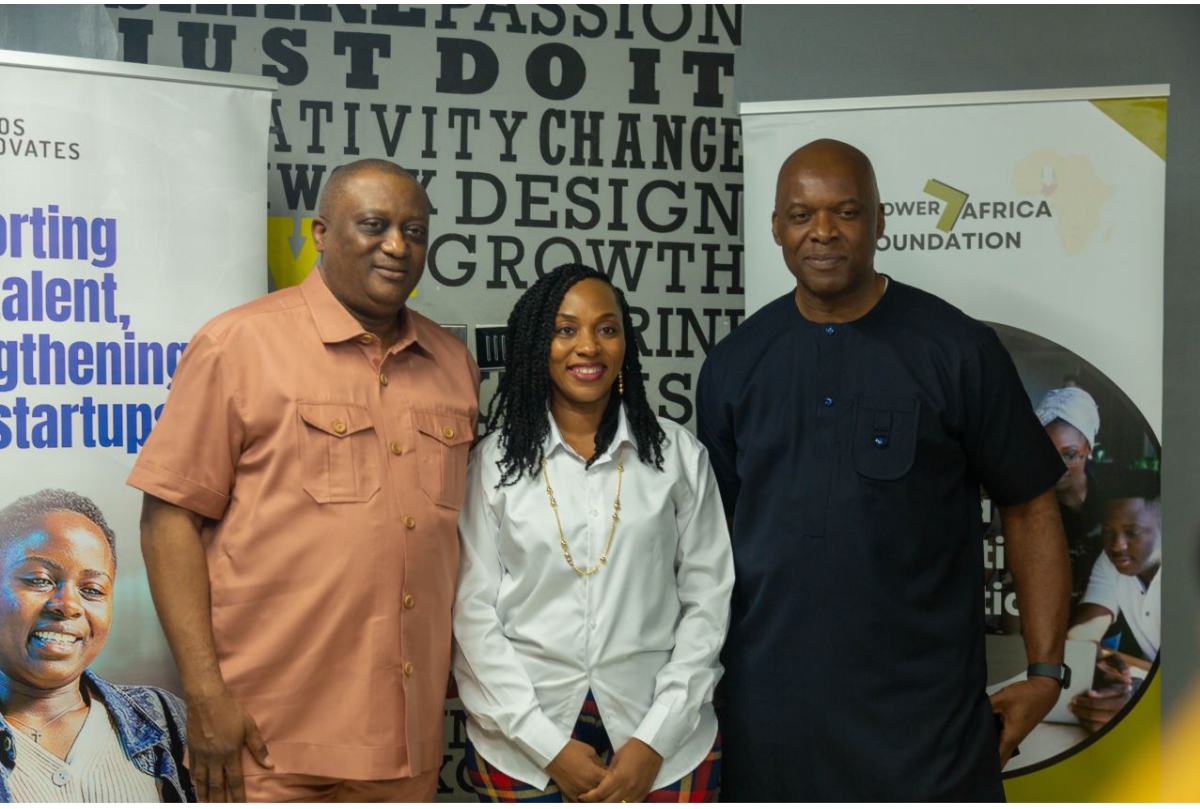
On August 10, the Lagos State Employment Trust Fund (LSETF), in partnership with InnoPower Africa, launched EkoAI Academy, a programme that aims to train 10,000 young Lagosians in artificial intelligence. The programme is designed to give participants practical AI skills that can be applied to employment, entrepreneurship and other opportunities emerging as AI changes the way people work.
Now, while AI training programmes are hardly new, the scale and timing of this one are worth paying attention to.
Major Highlights
- 10,000 young Lagosians are expected to benefit from the EkoAI Academy programme.
- The programme is a partnership between the Lagos State Employment Trust Fund (LSETF) and InnoPower Africa.
- Training will focus on practical AI skills and their application to employment and entrepreneurship.
- EkoAI Academy joins a growing number of African initiatives focused on developing AI skills and supporting AI innovation.
- Other recent opportunities across the continent have targeted AI startups, students and researchers, suggesting a broader push to build African participation in the AI economy.
KINI BIG DEAL
The interesting thing about EkoAI Academy isn’t just that 10,000 Lagosians are about to learn AI. It’s that they’re joining a growing queue of opportunities for Africa to participate in the AI economy.
These opportunities are appearing in different forms. Google’s 2026 Accelerator programme in South Africa, for example, is supporting AI-focused startups with technical mentorship, resources and funding. In East Africa, the AI4EAC Innovation Challenge has allowed university students to develop AI solutions to real-world employment problems. Research initiatives are also creating opportunities for African researchers to investigate how digital technologies can be applied to problems on the continent.
These programmes are different in their objectives and scale, but there is a common thread running through them; they are creating pathways for Africans to participate in AI rather than simply consume it.
For much of the technology industry’s history, Africa has often occupied the position of the end user. A technology is developed elsewhere, launched globally, and eventually adapted for African markets. But artificial intelligence has the potential to be different.
EkoAI Academy is a fore-running catalyst for making that difference. You need people who understand AI before you can have people building AI startups. You need people who can identify useful applications before companies can develop them. And you need a large enough pool of digitally skilled people before an ecosystem can really take off.
Of course, training 10,000 people doesn’t mean Lagos is suddenly going to produce 10,000 AI engineers, and completing an AI course doesn’t automatically translate into a job or a successful business.
There’s still the much bigger problem of infrastructure, affordable internet, access to devices, funding and actual economic opportunities. But the opportunity for Africa to build things with AI is becoming harder to ignore.