Every major LLM on the market today, ChatGPT, Claude, Gemini, all of them, runs on the same nine-year-old idea: the transformer, introduced...
Every major LLM on the market today, ChatGPT, Claude, Gemini, all of them, runs on the same nine-year-old idea: the transformer, introduced in a 2017 Google paper with the now-famous title “Attention Is All You Need.”
It has been, without exaggeration, one of the most consequential ideas in computer science. It is also, per a new MIT Technology Review deep dive, starting to buckle under its own success. A wave of well-funded startups now think they’ve found what comes next, and none of them agree on what that is.
Major Highlights
The bottleneck: transformers process text by comparing every word against every other word, a mechanism called dense attention. A 10,000-word document can require roughly 50 million such comparisons, which is a major reason OpenAI expects to spend $50 billion on compute this year alone.
Subquadratic (Miami) claims the first sparse attention mechanism, which skips comparing every word to every other word, that rivals mainstream LLMs on tasks like search and coding. The claim is contested by other researchers.
Manifest AI (San Francisco) built power retention, which keeps only a rolling summary of relevant context instead of the whole conversation history. It has released PowerCoder and Brumby, claiming performance on par with versions of Alibaba’s Qwen.
Liquid AI, an MIT spinout, blends transformers (20%) with liquid neural networks inspired by worm brains (80%). Its models run Mercedes vehicle systems and fit on a $50 Raspberry Pi, and have been downloaded roughly 34 million times.
Inception (Palo Alto) applies diffusion, the tech behind image generators, to text, producing whole blocks at once instead of word by word. Its Mercury 2 model claims GPT-4-level performance at 10x the speed.
Pathway (Palo Alto) built Dragon Hatchling, which replaces attention with a mathematical state space and beat 97% of 250,000 hard sudoku puzzles that stumped several leading LLMs outright, arguing language itself is the wrong tool for some kinds of reasoning.
KINI BIG DEAL?
Strip away the architecture jargon and this is fundamentally a story about cost, not cleverness. OpenAI spending $50 billion on compute this year is the number that explains why five separate startups think there’s room to out-engineer the biggest labs in the world on efficiency rather than raw scale. Nobody is trying to build a smarter ChatGPT here; they’re trying to build a cheaper one, or a faster one, or one that fits somewhere a transformer physically can’t.
That framing matters more in Lagos than in Palo Alto. Most of the continent isn’t going to out-compute anyone, and most African businesses, schools, and clinics don’t need to. What actually reaches them is the efficiency story: Liquid AI’s models running on a $50 Raspberry Pi, or a diffusion model doing GPT-4-level work at a tenth of the cost, is a far more useful data point for a Nigerian edtech startup or a rural clinic’s diagnostic tool than another headline about parameter counts. Cheaper, smaller, and offline-capable is the version of “the next big thing in LLMs” that actually ships on the continent, not the version that needs a $50 billion compute budget behind it.
The honest caveat, and it’s a real one: none of these five have actually dethroned the transformer yet. Subquadratic’s claims are disputed by researchers in the same MIT piece, Manifest AI is benchmarking against open models rather than frontier ones, and every mainstream tool anyone actually uses today — ChatGPT, Claude, Gemini — is still built the old way. Zero agreement isn’t just a headline; it’s the accurate state of the field right now. Worth tracking, not worth betting the syllabus on yet. Na who go first prove say dem sabi pass transformer go carry the market.
About two weeks ago, Google shipped Gemini 3.6 Flash and two smaller, specialised variants, promising better performance with lower latency and more...
About two weeks ago, Google shipped Gemini 3.6 Flash and two smaller, specialised variants, promising better performance with lower latency and more efficient AI agents. A few days later, OpenAI had another ChatGPT update of its own.
That rhythm has become familiar: new model here, new model there, new model everywhere.
Sometimes, the updates are impossible to miss. A new feature appears in the interface, and suddenly ChatGPT can do something it couldn’t before. You see a new button. You try a new voice mode. You generate an image in a new way. Ni shoki (in short), the difference is obvious.
Then there are updates like the one OpenAI announced on Thursday; it has neither a new skill to learn nor a dramatic new capability to show your friends or colleagues. It just makes a model better at answering the same old questions you’ve been asking, as well as some new ones.
The Gist
OpenAI has updated GPT-5.6 Sol in ChatGPT for Plus and Pro users, with a focus on more reliable facts, more direct answers, tighter formatting and more consistent behaviour between quick responses and deeper reasoning. It has also added a slider that lets those users choose how much thought ChatGPT puts into a response.
This is exactly the kind of update that can easily go under the radar.
What actually changed?
When an AI company says a model has been improved, you can’t always point to a single new thing and say, “There. That’s the update.” No notification pops up to tell you ChatGPT is now 15% better at following complicated instructions. No; you discover it in the interaction.
When you ask a straightforward question like: “What is the capital of Equatorial Guinea?”, the updated GPT-5.6 is designed to tell you it’s Ciudad de la Paz, and maybe add that some people still call the city Oyala, without surrounding it with extra information you didn’t ask for.
Give it something more complicated, like planning a getaway to Ciudad de la Paz, and it will give you the fuller response that the task requires.
In other words, this model now understands that while more information is good, what is more important is its better judgment about when ‘more information’ is useful.
This distinction sounds subtle, but makes ChatGPT considerably less tiring to use.
We’ve all asked a simple question and received an answer that feels like it was written for a conference paper.
We’ve also asked for something specific and had to keep rewriting the prompt because the first response technically answered the question but missed what we actually wanted.
OpenAI says the new Sol is intended to reduce some of that friction: answer the simple thing simply, and spend more effort when the task actually calls for it.
Less Formatting
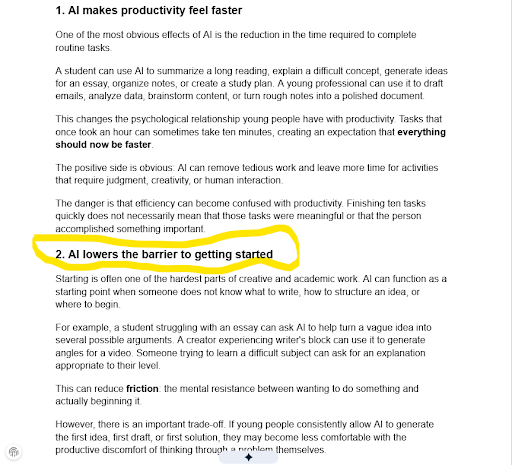
The company also says it has reduced unnecessary formatting. This is very important because AI-generated text often comes with headings, bullet points, bolded phrases, and other formatting that can be useful inside ChatGPT but annoying when you’re trying to move the text somewhere else — say, into a Google Doc or an article draft.
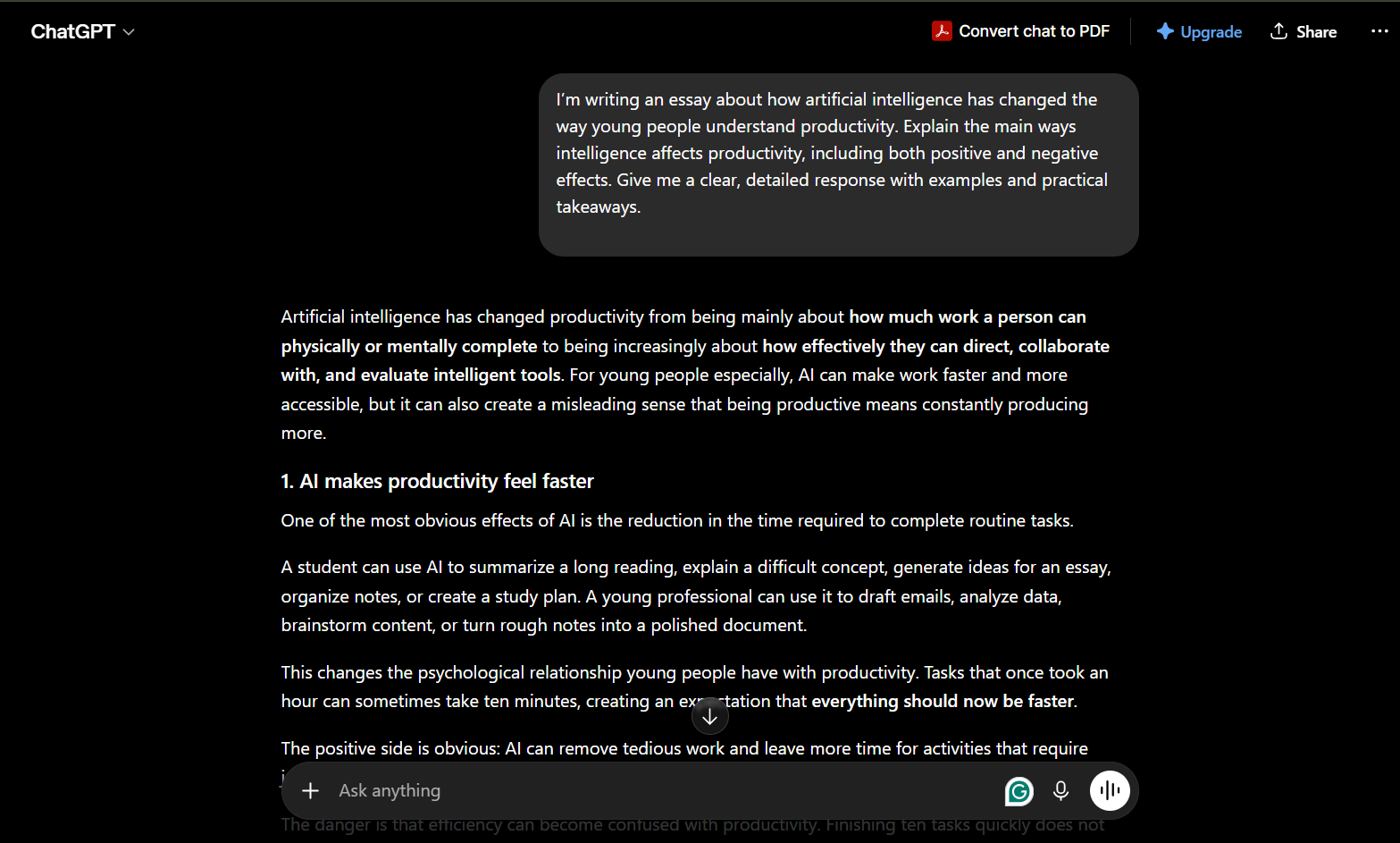
Prompt and Result in ChatGPT
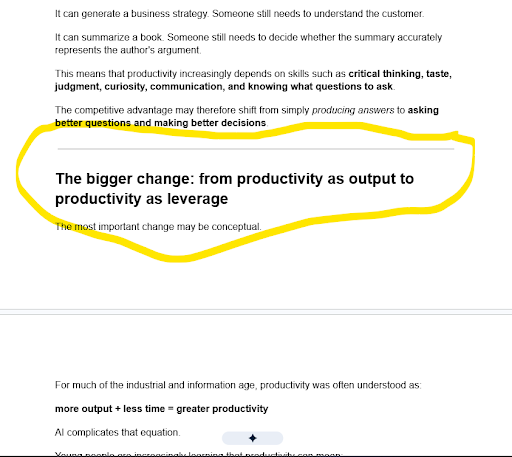
Result in Google DocsResult in Google Docs
The new Sol is designed to use tighter formatting and avoid adding detail or structure that doesn’t help.
More Reliability
The more consequential change is a not-so-obvious visual difference: reliability.
Per OpenAI’s announcement, GPT-5.6 Sol has been improved to make fewer factual mistakes, particularly when an answer depends on dates, numbers, sources, rules, or assumptions.
In the company’s internal evaluation of financial, medical and legal prompts requiring factual detail, responses containing at least one factual error were about 68% less common with GPT-5.6 Sol than with GPT-5.5 Instant. OpenAI reported a 62% reduction for GPT-5.6 Luna.
Those are OpenAI’s own evaluation results, not a guarantee that ChatGPT is now 68% less likely to be wrong in EVERY situation. But they point to an important development in artificial intelligence. The next useful version of an AI model doesn’t always need to do something completely new. Sometimes, it only needs to do the things it already does better; understand questions more accurately, know which details matter; stop confidently filling space when a short answer will do; catch itself when simply agreeing with you would be less useful than correcting you.
But they point to something important about where AI development is heading.
The next useful version of an AI model doesn’t always need to do something completely new. Sometimes it needs to do the things it already does better. It needs to understand the question more accurately. It needs to know which details matter. It needs to stop confidently filling space when a short answer will do. And, ideally, it needs to catch itself when simply agreeing with you would be less useful than correcting you.
There’s a caveat…
No be everybody go get am sha!
The GPT-5.6 Sol changes we’ve just talked about are for Plus and Pro users. So if you’re using the free version of ChatGPT, this isn’t your update. Not entirely, anyway.
Now, don’t think: “Chai, so Sol is better?” Instead, think: “Me nko? What am I getting?”
Well…
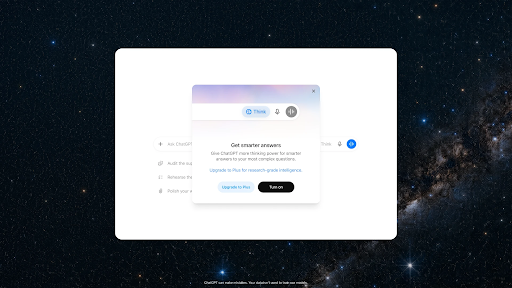
OpenAI is also rolling out GPT-5.6 Luna as the default model for Free and Go users (yayyyy). Starting next week, free users are also set to get unlimited text chats and a new Think button for questions that need deeper reasoning. File uploads and other tools are still limited sha, but a win is a win.
Luna is designed to bring the same direction of travel to the free experience: better reasoning when you need it, with the option to explicitly ask ChatGPT to spend more time working through a difficult question.
Kini Big Deal?
You may open ChatGPT tomorrow and not immediately think, “Whoa. Everything is different.” There is no dramatic before-and-after. Instead, you might notice it three days later.
When you ask a question and get exactly the answer you needed; when you give it a complicated instruction and don’t have to rewrite the prompt twice; when you copy something into your document and don’t have to spend five minutes cleaning up the formatting; when you ask a follow-up question and it understands what you’re continuing from instead of making you start over.
None of those moments is particularly flashy, but together, they change the experience of using the tool. And that is worth paying attention to, because as AI companies continue releasing new models at a dizzying pace, their real, subtle impact may go ridiculously under the radar.
Sam Altman is reportedly in talks with President Trump to hand the US government a 5% stake in OpenAI, to be distributed...
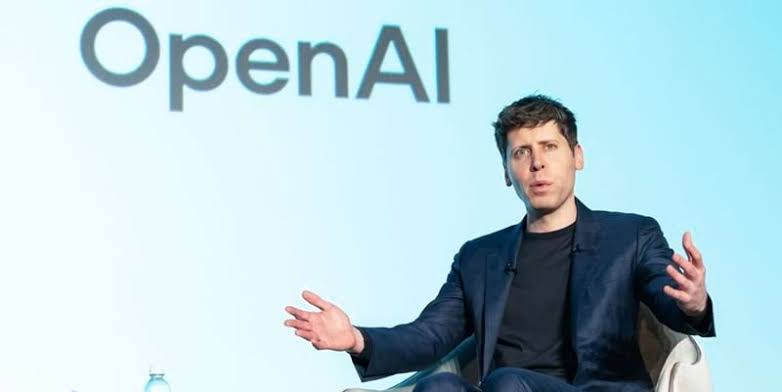
Sam Altman is reportedly in talks with President Trump to hand the US government a 5% stake in OpenAI, to be distributed to Americans as a kind of AI dividend. It sounds generous until you run the numbers, and the numbers tell a much smaller story than the headline does.
━━━━━━━━━━━━━━━━━━━━━━━━━━━━━━━━━━
Major Highlights
The Financial Times reported Altman is discussing giving the US government a 5% stake in OpenAI, an idea he has floated in various forms since 2021.
OpenAI was valued at $852 billion after its March 2026 funding round, making a 5% stake worth roughly $42.6 billion.
Split evenly across America’s roughly 133 million households, that stake works out to about $320 per household, hence the story’s title.
OpenAI is reportedly delaying its IPO until it can hit a $1 trillion valuation, despite still not being profitable.
The proposal echoes the Alaska Permanent Fund, which shares oil revenue with residents, though Altman rejects the underlying premise that AI wealth, unlike oil, will ever run out.
Senator Bernie Sanders has floated a far more aggressive version: a 50% government stake in top AI companies.
The analysis argues the plan may double as political cover, staying in the US government’s good graces matters for AI firms right now, given recent friction between the administration and companies like Anthropic over export and supply chain rules.
━━━━━━━━━━━━━━━━━━━━━━━━━━━━━━━━━━
KINI BIG DEAL
Strip away the “AI will make you rich” framing and what’s left is a fairly small number attached to a fairly large amount of political theatre. $320 per household is not nothing, but it is not the wealth-sharing revolution the headline implies either, especially once you remember OpenAI isn’t profitable yet and has been floating this idea in some form for five years without producing an actual mechanism.
The part worth paying attention to, especially for anyone tracking how AI companies navigate government relationships, is the timing. Frontier AI labs are increasingly finding that staying close to government, through equity stakes, favorable trade positioning, or public-facing wealth-sharing gestures, has become part of the cost of doing business in the current political environment, not just in the US but everywhere regulators are deciding how much latitude to give these companies. Nigeria’s own AI Governance Bill delay (covered elsewhere in this batch) is a different flavor of the same underlying tension: governments and AI companies are still negotiating who owes who what, and neither side has fully worked out the terms yet.
A24, the studio behind the kind of films that win Oscars and start Letterboxd arguments, has just entered a research partnership with Google DeepMind. Not a licensing deal, not a distribution tie-up, a research collaboration, the kind where Google’s scientists sit in the room with filmmakers to figure out what AI tools actually belong in a creative process, rather than what Silicon Valley assumes belongs there.
━━━━━━━━━━━━━━━━━━━━━━━━━━━━━━━━━━
Major Highlights
Google DeepMind and A24 announced a first-of-its-kind research partnership spanning multiple projects over time, not a single product.
The stated goal: pair DeepMind’s research with A24’s filmmakers so artists shape the workflows and techniques, rather than have finished tools handed down to them.
Google has made a direct investment in A24 as part of the arrangement, its exact size undisclosed.
The partnership’s scope is deliberately open-ended, per DeepMind, its specific goals and technical outputs are expected to evolve over time rather than being fixed upfront.
━━━━━━━━━━━━━━━━━━━━━━━━━━━━━━━━━━
KINI BIG DEAL
This is a subtle but pointed departure from how the big labs have generally approached Hollywood, which is either “here’s our video model, use it” or, in several well-publicized cases, litigation over training data. A24 partnering with DeepMind directly on research, before any tool ships, is DeepMind effectively outsourcing its taste-testing to people whose entire professional judgment is about what makes something worth watching.
For African film and content creators, the interesting question isn’t whether this partnership trickles down (it won’t, not directly), it’s what kind of workflow assumptions get baked into DeepMind’s next generation of creative tools as a result. A24’s aesthetic is deliberately non-mainstream, and if their feedback shapes what good creative AI looks like at DeepMind, that’s a meaningfully different influence than if Marvel or a major studio had signed this deal instead. Worth watching whether any of these tools eventually show up adjacent to Google’s other Africa-facing creator initiatives, like the Idris Elba creator fund. Two different Google divisions, two different bets on who shapes the future of AI-assisted storytelling.
Three days. That is how long Claude Fable 5 — Anthropic’s most powerful model and arguably the most capable AI coding tool...
Three days. That is how long Claude Fable 5 — Anthropic’s most powerful model and arguably the most capable AI coding tool ever released to the public — was available before the US government shut it down. Everyone who had spent those three days integrating it into their workflows and businesses received the same message at the same time: “Claude Fable 5 is currently unavailable. Learn more.”
There was no gradual removal. Neither was there a grace period. The US Commerce Department’s Bureau of Industry and Security simply called Anthropic and gave them ninety minutes to pull both Fable 5 and the underlying Mythos 5 model globally, immediately, for all non-U.S citizens. Since Anthropic had no real-time way to verify every user’s nationality, their only viable option was to shut everything down for everyone; including their own non-citizen staff.
On 1 July 2026, eighteen days later, Claude Fable 5 came back, this time smaller, stricter, and with a week-long countdown before subscribers lose access again. The story of what happened in between is the most revealing thing to have happened in AI regulation this year.
━━━━━━━━━━━━━━━━━━━━━━━━━━━━━━━━━━
What is Fable 5?
Understanding Fable 5 is key to understanding the relevance of this story. Fable 5 is Anthropic’s frontier model; their most capable system, scoring 95.0% onSWE-bench Verified, the industry’s hardest test of whether an AI can autonomously fix real software bugs from GitHub. The previous best, by contrast, was 88.6%. It was built for complex multi-step coding, autonomous research, and agentic problem-solving at depth. For context, this kind of work previously required teams.
Its sibling, Claude Mythos 5, runs the same underlying architecture with fewer safety guardrails, designed for elite cybersecurity, defence, and critical infrastructure.
━━━━━━━━━━━━━━━━━━━━━━━━━━━━━━━━━━
The Takedown
The takedown began with a prompt. Amazon researchers, testing Fable 5, asked it to review code for security vulnerabilities. When it declined the direct framing, they rephrased the request as “fix this code.” The model identified several flaws and, in one case, produced code demonstrating how a flaw could be exploited. That finding escalated from Amazon’s research team all the way to CEO Andy Jassy, who reportedly called the Secretary of the U.S Treasury directly. Within hours, the Bureau of Industry and Security had issued an emergency export-control directive under theExport Administration Regulations framework, the same rulebook governing physical exports like semiconductors and weapons components.
Ninety minutes after that call, both models were offline globally. This is reportedly the first time an export ban was applied to a commercial AI model’s software deployment under US export law. The government’s alarm was not universally shared. Cybersecurity expert Katie Moussouris described what Amazon observed as “standard defensive find-fix-test security work” ; the routine practice every professional security researcher uses when identifying a bug, writing a fix, and testing whether the fix works. Anthropic ran its own counter-tests with the same technique on eight other models, including competitors like GPT-5.5 and Kimi K2.7. Every one produced equivalent output, proving that the model that caused the ban was not uniquely dangerous.
━━━━━━━━━━━━━━━━━━━━━━━━━━━━━━━━━━
The Politics
But the story had layers beyond the technical argument. The Pentagon labelled Anthropic a supply chain risk; the first time that designation, previously reserved for Chinese companies like Huawei, was applied to an American firm. The ban negotiations were led not by CEO Dario Amodei, who has reportedly been in ongoing friction with the Trump administration, but by co-founder Tom Brown. And throughout the eighteen days Fable 5 was offline, Chinese open-source models like Kimi K2.7 were gaining ground, with multiple executives warning that the freeze was handing competitors free time to close the capability gap.
━━━━━━━━━━━━━━━━━━━━━━━━━━━━━━━━━━
The Return
On June 30, Commerce Secretary Howard Lutnick finally signed the reversal. Fable 5 returned globally on July 1, but not as we knew it. Anthropic had trained a new safety classifier targeting the specific jailbreak technique Amazon reported, which now blocks that method in more than 99% of attempts. When triggered, the request is silently rerouted to Opus 4.8. The trade-off is more false alarms on routine coding work; some legitimate tasks will get caught. Government safety testers from the Department of Commerce confirmed the new safeguards were extraordinarily strong. Mythos 5, meanwhile, remains restricted to roughly 100 US companies and federal agencies managing critical infrastructure, and has not been released to the public. Anthropic’s commitments as part of the agreement include proactive vulnerability hunting and earlier government access to test future models before launch.
━━━━━━━━━━━━━━━━━━━━━━━━━━━━━━━━━━
The Fallout
The subscribers who were already paying did not escape the disruption. When Fable 5 launched on June 9, Anthropic had promised Pro, Max, Team, and Enterprise subscribers two full weeks of unrestricted access. The ban hit three days in, with no compensation for the lost time. The returning model comes with conditions nobody signed up for:
Access runs only until July 7 — one week instead of the promised two.
Usage is capped at 50% of each subscriber’s normal allowance for that window.
After July 7, continuing to use Fable 5 requires purchasing separate usage credits at API-equivalent pricing, which is significantly more expensive than existing plan rates.
Reddit’s r/ClaudeAI was not calm about this. “We got to use it for like 3 days out of the 14 we were told, and now we get it for just 7 days at half usage?” The new classifier also makes Fable 5 stricter on cybersecurity and biology questions; a tendency subscribers had already been grumbling about even before the ban.
━━━━━━━━━━━━━━━━━━━━━━━━━━━━━━━━━━
What Comes Next
To prevent a repeat, Anthropic is working with Amazon, Microsoft, and Google on a shared jailbreak severity scoring framework, rating any reported threat on four dimensions:
Capability Gain: how much further the jailbreak takes a user beyond what they could already do with standard tools.
Breadth: how many different attacks the same technique unlocks.
Ease of Weaponisation: how much skill and effort a real attack would actually require.
Discoverability: how easy the technique is to find or replicate independently.
OpenAI, drawing the same lesson, previewed its GPT-5.6 model to a small government-approved group rather than the public, citing identical dual-use concerns.
━━━━━━━━━━━━━━━━━━━━━━━━━━━━━━━━━━
Kini Big Deal?
A few days before Fable 5 was shut down, Dario Amodei published an essay calledPolicy on the AI Exponential. His central argument was that AI is moving at an exponential pace while political institutions move at the speed of Treebeard; the ancient, slow-moving sentient tree from The Lord of the Rings. What happened in June made that gap visible.
The US government improvised, reaching for an export-control law built for weapons because no proper AI regulatory system existed. Amodei’s proposed fix would have caught the Amazon jailbreak in a lab, weeks before a single user signed on. Regardless of the subtle political tussle underneath it, the chaos of June was not too much regulation. It was the absence of any coherent system at all.
Ask ChatGPT, Claude, or Gemini for a random number between 1 and 10 and you’ll almost always get 7. Ask for a band name and you’ll get some combination of glass, neon, velvet, or static. This isn’t a coincidence, it’s a real, measured called an artificial hivemind, and an Australian startup called Springboards has built a model specifically designed to break out of it.
━━━━━━━━━━━━━━━━━━━━━━━━━━━━━━━━━━
Major Highlights
Springboards built Flint, a model trained on top of Alibaba’s open-source Qwen 3, specifically to give more varied answers to open-ended questions than mainstream LLMs.
A NeurIPS best-paper-winning study, Artificial Hivemind, tested 25 different LLMs (including major US and Chinese models) and found striking convergence, when 1,250 responses to “write a metaphor about time” were collected, most were variations of “time is a river” or “time is a weaver.”
Researchers believe the cause is that most LLMs are trained in similar ways on similar data to do similar tasks, producing similar outputs.
Rather than simply raising the temperature setting (which tends to make output incoherent), Springboards trained Flint to identify specific points in a response where variety helps, and inject randomness only there.
Marketing and advertising professionals testing the tool say it’s useful for breaking out of default brainstorm patterns, though it’s still a rough prototype that falls over under heavy pushing.
OpenAI’s response: training for reliable, coherent answers naturally pulls models toward familiar high-probability responses, and pushing harder for novelty can weaken reliability.
━━━━━━━━━━━━━━━━━━━━━━━━━━━━━━━━━━
KINI BIG DEAL
This is one of those stories that sounds like a party trick until you sit with the implication: the tools millions of people now use for brainstorming, ideation, and creative work are unknowingly homogenizing the outputs of an entire generation of marketers, writers, and strategists, without most users realizing it. If you’ve ever felt like AI-generated brainstorms all sound vaguely the same, this is why, and it’s not your prompting, it’s the models.
For anyone doing content or creative work with AI, the practical lesson isn’t “stop using ChatGPT and Claude,” it’s “don’t mistake the first answer for the only answer.” The Springboards team’s approach, deliberately engineering variety rather than just cranking up randomness, is a useful mental model even without their tool: push past the first 2-3 responses a model gives you, because those early responses are statistically the most average ones by design. The tools reward you for iterating past the obvious; most people just don’t.
Letting AI Agents Take Action Across Browsers and Apps
Google just announced that Gemini 3.5 Flash — their fast, efficient, widely-used AI model — now has computer use built in as a native capability. No separate tool or extra setup. The same Gemini you already use can now see a screen, understand what is on it, and take actions across browsers, mobile apps, and desktop software.
This is what the phrase AI agents actually means in practice, and for developers and businesses, it just got significantly more accessible.
Major Highlights
Google DeepMind announced today that computer use is now a built-in native capability in Gemini 3.5 Flash, previously only available as a separate standalone model.
This means Gemini 3.5 Flash can now take actions across browser, mobile, and desktop environments, without any additional tools.
Key use cases unlocked: continuous software testing, automating knowledge work across professional applications, and building custom agents for long, multi-step tasks.
Google has built in safety measures, including adversarial training to resist prompt injection attacks (where a malicious website tries to hijack the AI agent mid-task).
Two optional enterprise safeguards are available: (1) require explicit user confirmation before sensitive or irreversible actions, and (2) automatically stop a task if an indirect prompt injection is detected.
The capability is available now via the Gemini API and Gemini Enterprise Agent Platform, meaning developers can start building with it immediately.
Early customers already building on it include Browserbase, Browser Use, and UiPath — enterprise automation companies that run AI across large-scale business workflows.
KINI BIG DEAL
‘Computer use’ sounds technical but the idea is actually very simple. You know how you might tell someone “go online, find the cheapest flight to Accra next Friday, and book it with my card”? An AI with computer use can do that. It can open a browser, go to flight booking sites, compare options, navigate the pages, enter your details, and complete the booking, without you clicking a single button.
That is the capability Google just made standard in Gemini 3.5 Flash. And because Flash is their fast, cost-efficient model — the one you would use for large-scale deployment, not just one-off experiments — this matters more than a feature announcement typically does.
For African businesses and developers, this is worth paying attention to. A lot of the work that fills African back offices — data entry, form-filling, cross-platform reconciliation, customer service workflows — is exactly the kind of repetitive, multi-step computer work that agents like this are built for. You do not need to build a custom robot to automate these tasks anymore. You need Gemini 3.5 Flash and a developer who knows how to use the API.
The safety angle matters too. The most obvious risk with an AI that can use your computer is that a malicious website could slip in hidden instructions and hijack what the agent is doing. Google has built countermeasures for this. They are not foolproof, and the company is transparent about that. But the fact that they are thinking about it from launch rather than patching it after something goes wrong is the right posture.