About two weeks ago, Google shipped Gemini 3.6 Flash and two smaller, specialised variants, promising better performance with lower latency and more efficient AI agents. A few days later, OpenAI had another ChatGPT update of its own.
That rhythm has become familiar: new model here, new model there, new model everywhere.
Sometimes, the updates are impossible to miss. A new feature appears in the interface, and suddenly ChatGPT can do something it couldn’t before. You see a new button. You try a new voice mode. You generate an image in a new way. Ni shoki (in short), the difference is obvious.
Then there are updates like the one OpenAI announced on Thursday; it has neither a new skill to learn nor a dramatic new capability to show your friends or colleagues. It just makes a model better at answering the same old questions you’ve been asking, as well as some new ones.
The Gist
OpenAI has updated GPT-5.6 Sol in ChatGPT for Plus and Pro users, with a focus on more reliable facts, more direct answers, tighter formatting and more consistent behaviour between quick responses and deeper reasoning. It has also added a slider that lets those users choose how much thought ChatGPT puts into a response.
This is exactly the kind of update that can easily go under the radar.
What actually changed?
When an AI company says a model has been improved, you can’t always point to a single new thing and say, “There. That’s the update.” No notification pops up to tell you ChatGPT is now 15% better at following complicated instructions. No; you discover it in the interaction.
When you ask a straightforward question like: “What is the capital of Equatorial Guinea?”, the updated GPT-5.6 is designed to tell you it’s Ciudad de la Paz, and maybe add that some people still call the city Oyala, without surrounding it with extra information you didn’t ask for.
Give it something more complicated, like planning a getaway to Ciudad de la Paz, and it will give you the fuller response that the task requires.
In other words, this model now understands that while more information is good, what is more important is its better judgment about when ‘more information’ is useful.
This distinction sounds subtle, but makes ChatGPT considerably less tiring to use.
We’ve all asked a simple question and received an answer that feels like it was written for a conference paper.
We’ve also asked for something specific and had to keep rewriting the prompt because the first response technically answered the question but missed what we actually wanted.
OpenAI says the new Sol is intended to reduce some of that friction: answer the simple thing simply, and spend more effort when the task actually calls for it.
Less Formatting
The company also says it has reduced unnecessary formatting. This is very important because AI-generated text often comes with headings, bullet points, bolded phrases, and other formatting that can be useful inside ChatGPT but annoying when you’re trying to move the text somewhere else — say, into a Google Doc or an article draft.
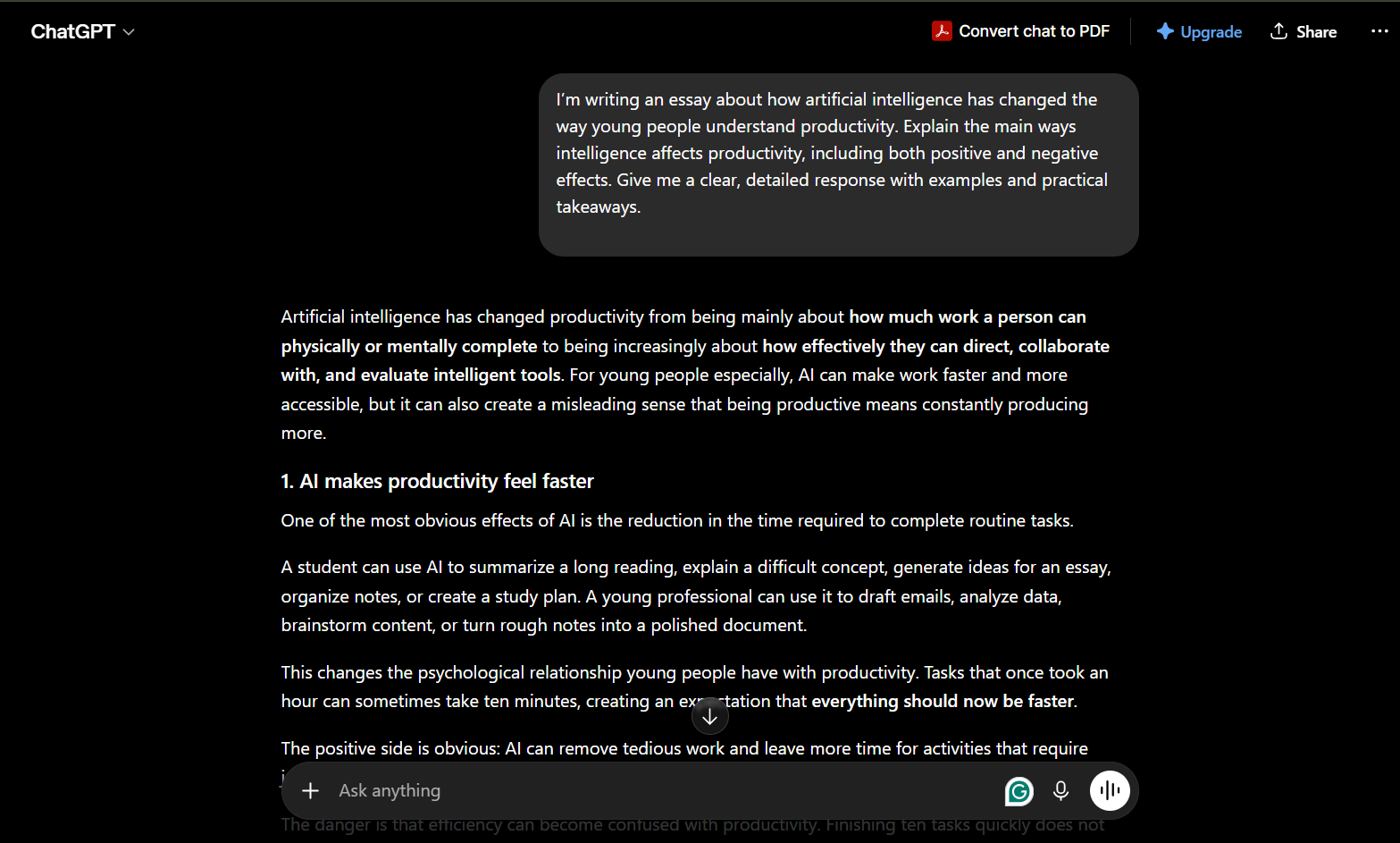
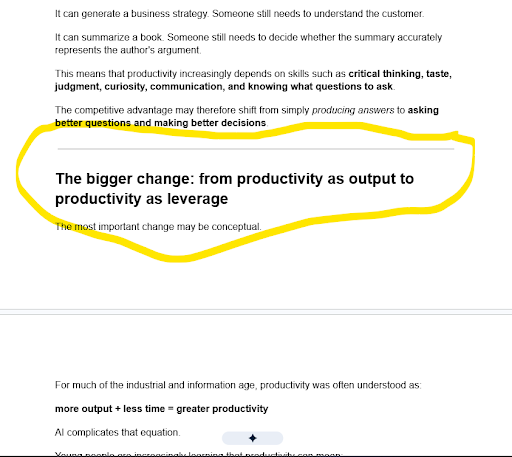
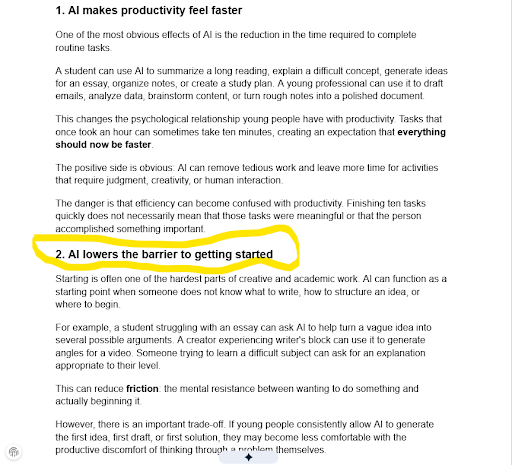
The new Sol is designed to use tighter formatting and avoid adding detail or structure that doesn’t help.
More Reliability
The more consequential change is a not-so-obvious visual difference: reliability.
Per OpenAI’s announcement, GPT-5.6 Sol has been improved to make fewer factual mistakes, particularly when an answer depends on dates, numbers, sources, rules, or assumptions.
In the company’s internal evaluation of financial, medical and legal prompts requiring factual detail, responses containing at least one factual error were about 68% less common with GPT-5.6 Sol than with GPT-5.5 Instant. OpenAI reported a 62% reduction for GPT-5.6 Luna.
Those are OpenAI’s own evaluation results, not a guarantee that ChatGPT is now 68% less likely to be wrong in EVERY situation. But they point to an important development in artificial intelligence. The next useful version of an AI model doesn’t always need to do something completely new. Sometimes, it only needs to do the things it already does better; understand questions more accurately, know which details matter; stop confidently filling space when a short answer will do; catch itself when simply agreeing with you would be less useful than correcting you.
But they point to something important about where AI development is heading.
The next useful version of an AI model doesn’t always need to do something completely new. Sometimes it needs to do the things it already does better. It needs to understand the question more accurately. It needs to know which details matter. It needs to stop confidently filling space when a short answer will do. And, ideally, it needs to catch itself when simply agreeing with you would be less useful than correcting you.
There’s a caveat…
No be everybody go get am sha!
The GPT-5.6 Sol changes we’ve just talked about are for Plus and Pro users. So if you’re using the free version of ChatGPT, this isn’t your update. Not entirely, anyway.
Now, don’t think: “Chai, so Sol is better?” Instead, think: “Me nko? What am I getting?”
Well…
OpenAI is also rolling out GPT-5.6 Luna as the default model for Free and Go users (yayyyy). Starting next week, free users are also set to get unlimited text chats and a new Think button for questions that need deeper reasoning. File uploads and other tools are still limited sha, but a win is a win.
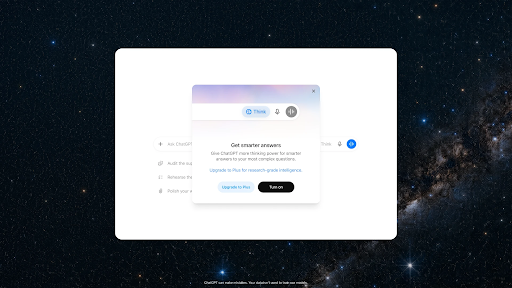
Luna is designed to bring the same direction of travel to the free experience: better reasoning when you need it, with the option to explicitly ask ChatGPT to spend more time working through a difficult question.
Kini Big Deal?
You may open ChatGPT tomorrow and not immediately think, “Whoa. Everything is different.” There is no dramatic before-and-after. Instead, you might notice it three days later.
When you ask a question and get exactly the answer you needed; when you give it a complicated instruction and don’t have to rewrite the prompt twice; when you copy something into your document and don’t have to spend five minutes cleaning up the formatting; when you ask a follow-up question and it understands what you’re continuing from instead of making you start over.
None of those moments is particularly flashy, but together, they change the experience of using the tool. And that is worth paying attention to, because as AI companies continue releasing new models at a dizzying pace, their real, subtle impact may go ridiculously under the radar.