
Exam season in Africa never really ends. Right now, UNILAG undergraduates are sitting second-semester exams while JAMB and WAEC candidates a few months out are already drilling past questions, and somewhere a NECO or ICAN candidate is cramming the night before exam with a torch and a photocopied syllabus. These are all different exams with the same problem: too much material, too little time, and no one to ask at 11 pm when a question refuses to make sense.
We have already written about AI tools built for learning generally: NotebookLM, Khanmigo, ChatGPT Study Mode, Quizlet, Coursera Coach, Socratic, and MagicSchool all still apply here, and if you have not read that piece, it is worth a look alongside this one.
However, exam prep is its own, narrower problem. It is not about understanding a subject over a semester, but about converting whatever you already half-know into marks on a specific day, against a specific syllabus, under a clock.
The tools below are built for that pressure specifically: past questions, mock CBTs, instant camera-based problem solving, flashcards that know when you are about to forget something, and study plans that account for the fact you have five subjects and eleven days.
You do not need all ten. You need the two or three that match the exam actually in front of you.
Here are the ten AI exam prep tools worth knowing right now.
1. Gauth
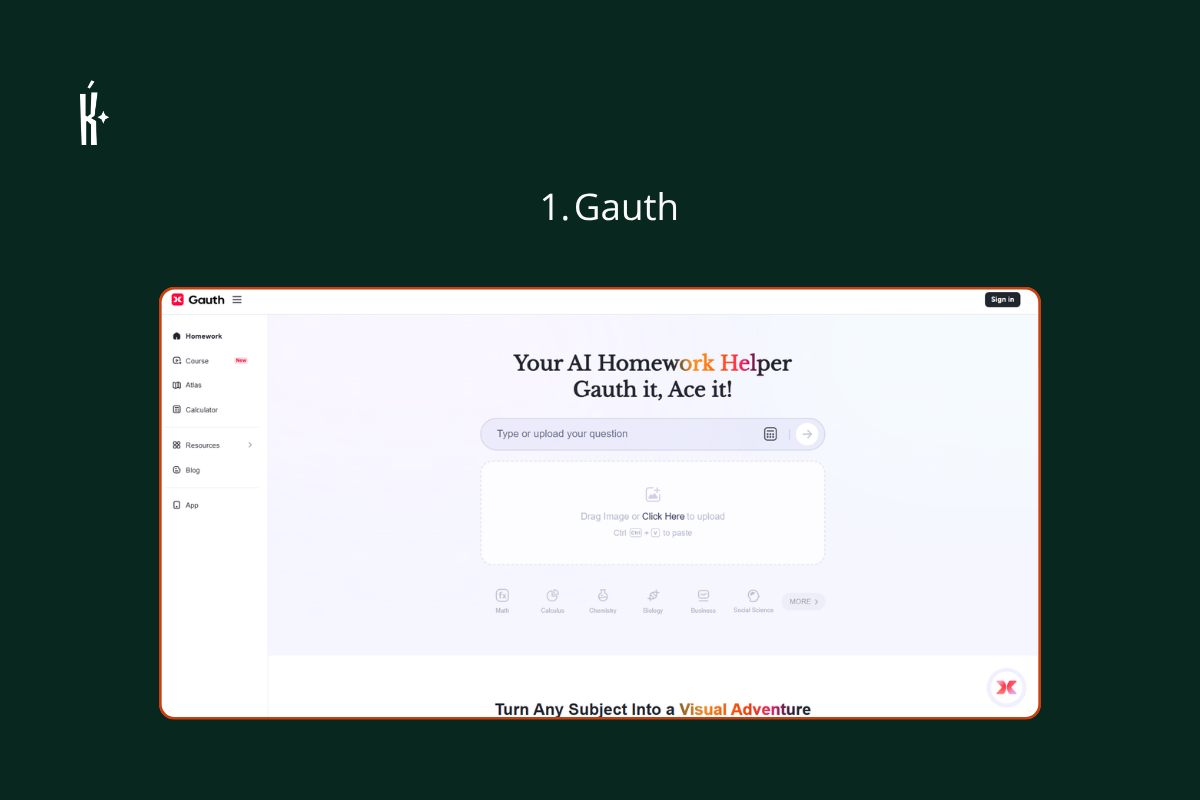
Every student has had the same 11 pm moment: one homework or past-question item standing between them and sleep, and no one around to ask. Gauth solves exactly that. Point your phone camera at a maths, physics, chemistry, or biology question, and it recognises the problem, crops it automatically, and works through it step by step rather than just handing over a final answer. This is useful because most exams, WAEC and university continuous assessment included, mark you on method, not just the final figure.
When a question is genuinely unusual and the AI explanation does not land, Gauth lets you send it to a verified human tutor using a ticket system, so you are not entirely stuck even on the odd question that trips up the model. It will not replace working through a syllabus properly, but as a last-mile tool for the specific question you are stuck on right now, it is hard to beat.
Best for: Instant, step-by-step help on a specific question you are stuck on, across maths and the sciences.
Pricing: Free with limited daily questions; Premium from roughly $9.99–$11.99/month, with an optional live-tutor add-on around $19.99/month.
Try it here: gauthmath.com
2. Photomath
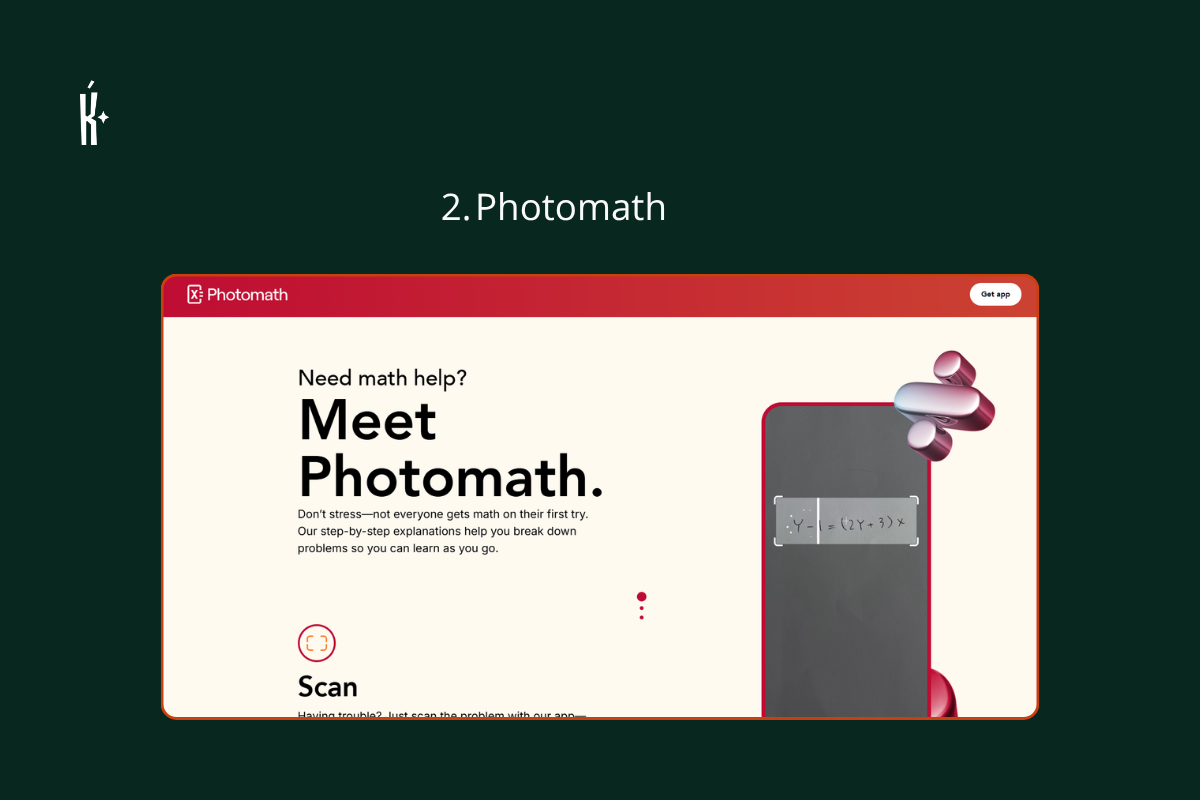
Photomath does one thing and has done it longer than almost anyone else in this list: point your camera at a maths problem — arithmetic, algebra, calculus, further maths — and it returns a full, animated, step-by-step walkthrough of how to solve it, not just the answer. Because it is free at its core and owned by Google, it has none of the “verify your account” friction some newer tools carry, and it works entirely offline once a problem is scanned in areas with patchy data.
It stays narrower than Gauth on purpose; no essay help, no live tutors, just mathematics done properly. For anyone preparing specifically for the maths component of JAMB, WAEC, or a university calculus paper, that narrowness is the point: one job done reliably for free.
Best for: Free, offline-friendly, step-by-step help specifically for maths and further maths revision.
Pricing: Free for core scanning and steps; Photomath Plus roughly $9.99/month or $69.99/year for detailed explanations and textbook solutions.
Try it here: photomath.com
3. Quizgecko
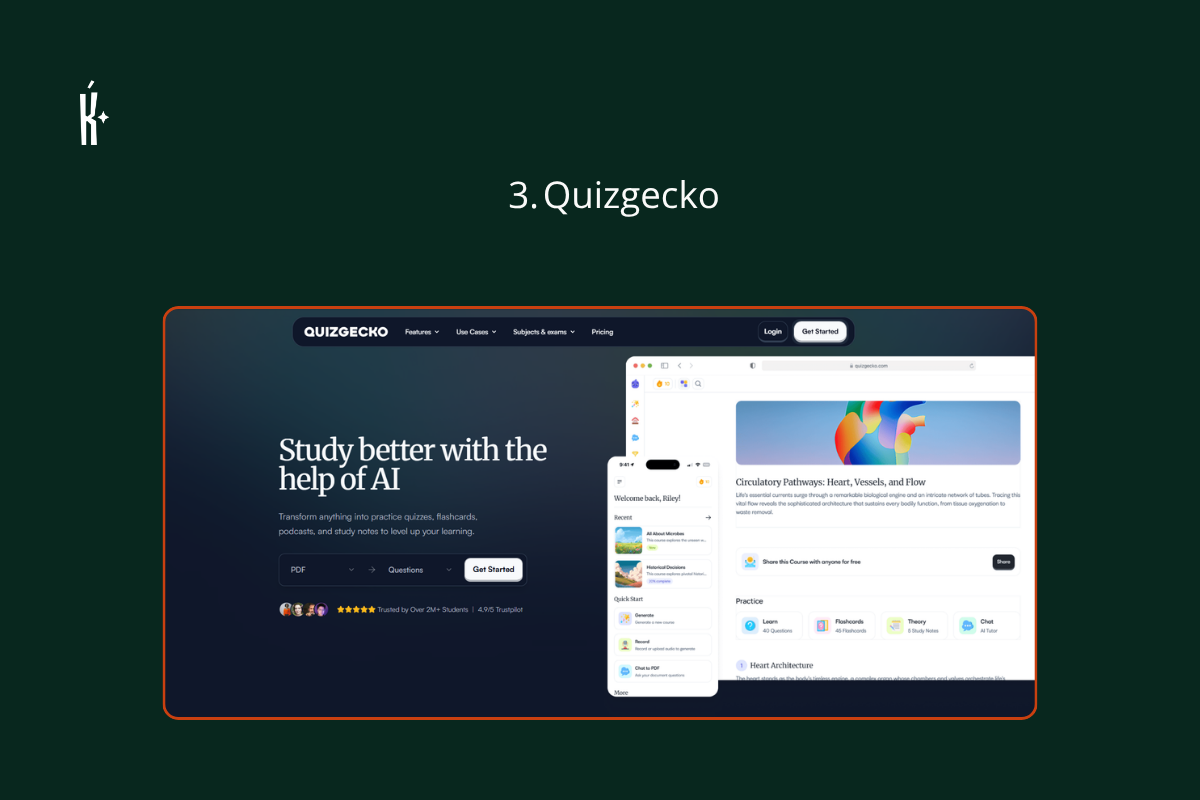
Quizgecko takes whatever you already have – a past-question PDF, a scanned textbook chapter, a lecturer’s slide deck, even a page of your own handwritten notes- and turns it into a quiz, a flashcard deck, or a full mock exam in under a minute. The point is not generating brand-new material; it is forcing you to actively recall what is already sitting in your notes, which is a far more effective way to revise than re-reading the same page for the fourth time.
For a student with a stack of past questions and not enough hours to work through them one by one, this compresses that stack into something you can drill in short, focused sessions between lectures or after work.
Best for: Turning your existing notes, slides, or past questions into ready-to-drill quizzes and mock exams.
Pricing: Free for up to 3 quizzes/month; Premium $16/month; Ultra $29/month.
Try it here: quizgecko.com
4. StudyFetch (Spark.E)
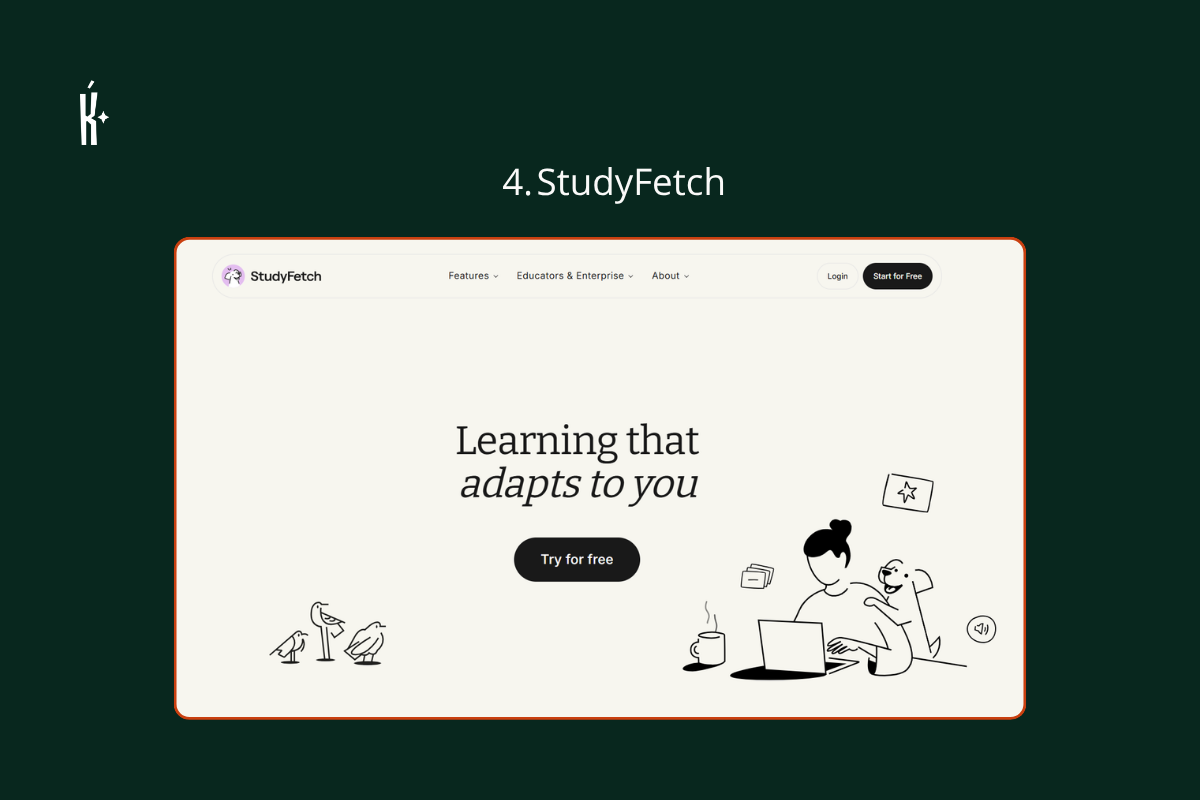
StudyFetch is built around a simple idea: upload your actual course material once — lecture slides, textbook chapters, even a recorded lecture — and Spark.E, its AI tutor, answers only from that material rather than a generic version of the topic. For university students preparing for a specific lecturer’s exam, where the exact framing of a concept matters as much as the concept itself, that specificity is the whole value.
Beyond tutoring, it auto-generates practice tests and flashcards from your uploaded material, and its Live Lecture Assistant can take notes in real time during class, so revision material builds itself as the semester goes rather than piling up the week before exams.
Best for: University students who want a tutor and practice tests built from their own lecture slides and textbooks, not generic explanations.
Pricing: Free plan with limited chats; Premium from $7.99/month ($4.99/ month if paid annually). A $3.92/week option exists for short cramming stretches.
Try it here: studyfetch.com
5. RemNote
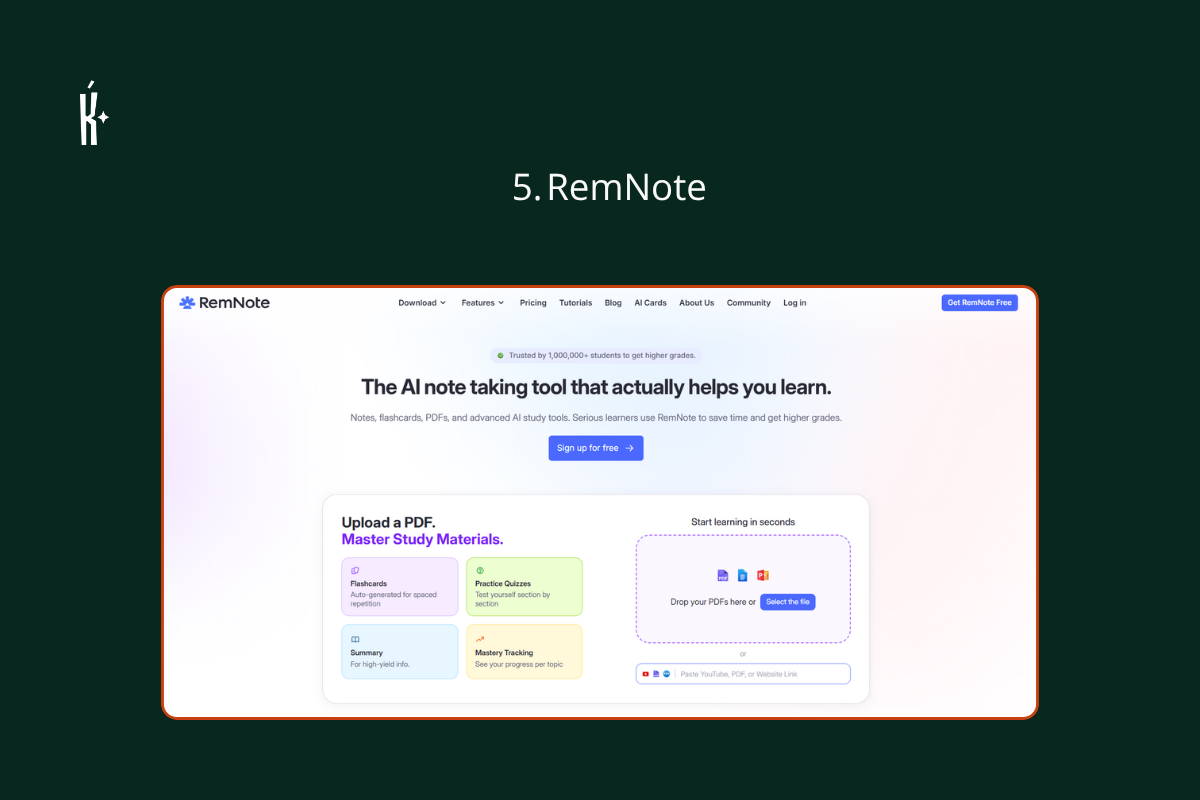
RemNote combines note-taking with spaced repetition, a memory technique that resurfaces a fact right before you are statistically about to forget it, rather than at a fixed daily interval. Its AI layer will generate flashcards directly from anything you paste in, so you are not spending revision time manually typing out cards instead of actually studying.
The honest case for RemNote over a plain flashcard app is the scheduling: it is the difference between cramming everything the night before and actually knowing the material by exam day because you reviewed it four times at the right intervals, not four times in the same evening.
Best for: Long-term retention through spaced repetition, for exams that reward knowing material cold rather than recognising it vaguely.
Pricing: Free plan available; Pro $8/month; Pro with AI $18/month.
Try it here: remnote.com
6. Scholarly
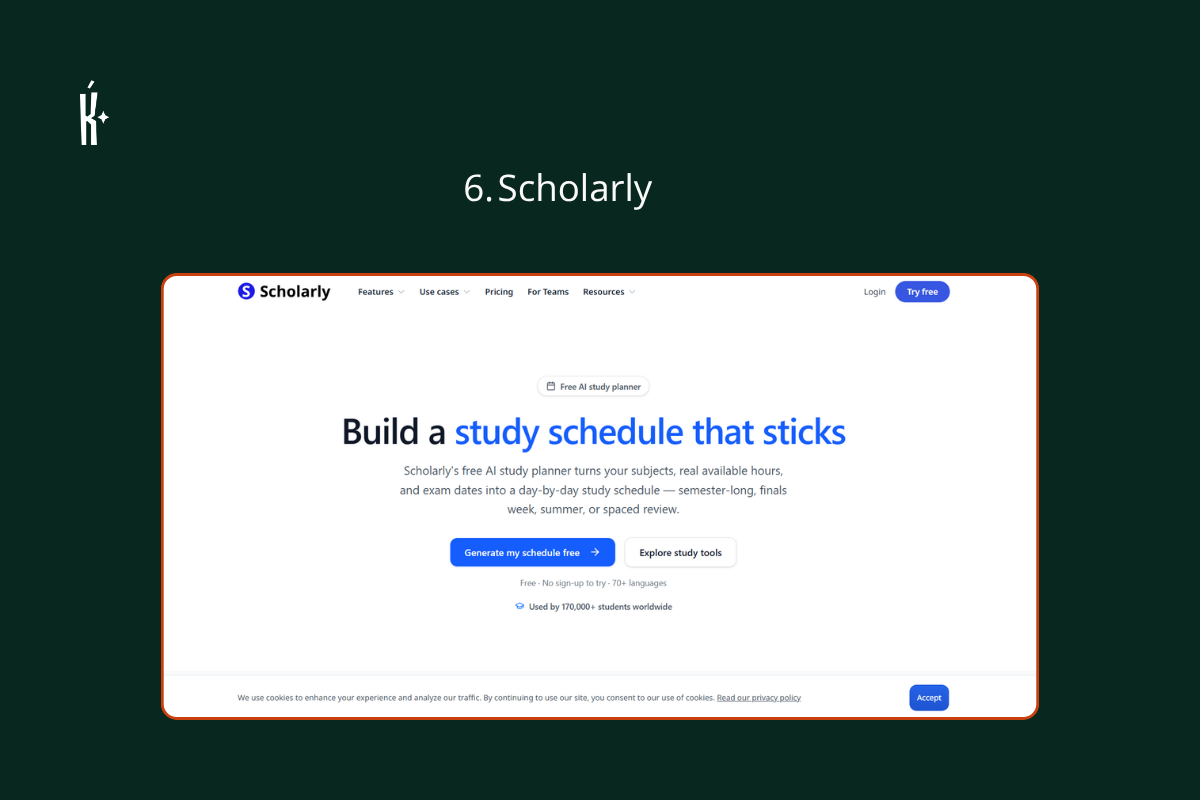
Most students do not fail an exam because they could not understand the material; they fail because they never actually got round to five of the eight topics on the syllabus. Scholarly fixes the planning half of that problem: give it your subjects, your exam dates, and the hours you honestly have free, and it produces a day-by-day study schedule that spreads out revision rather than leaving everything to the final week.
It will not study for you, and a plan is only as good as your willingness to follow it. But for anyone juggling four or five subjects with different exam dates — a very normal university exam or WAEC candidate’s reality — having the schedule already built removes the excuse of not knowing where to start.
Best for: Turning a pile of subjects and a fixed exam date into a realistic, spaced-out daily study schedule.
Pricing: Free; Premium $12/month; Teams $45/seat/month
Try it here: scholarly.so
7. Grammarly
For any exam with a written component — WAEC English Language and Literature, a university essay-based paper, ICAN’s written sections — the gap between a good answer and a great one is often less about ideas and more about how clearly those ideas are expressed under time pressure. Grammarly checks grammar and spelling as a baseline, but its more useful exam-prep feature is tone and clarity feedback: it flags when a sentence is doing too much at once, when an argument trails off before it lands, or when phrasing would not read as formal enough for an examiner.
Used on your own practice essays before the real exam, it turns the vague feedback of “your essays need work” into specific, sentence-level notes you can actually act on.
Best for: Sharpening essay-based exam answers using practice essays before the real exam.
Pricing: Free plan with 100 AI prompts/month; Pro from $12/member/month (billed annually).
Try it here: grammarly.com
8. Prep50
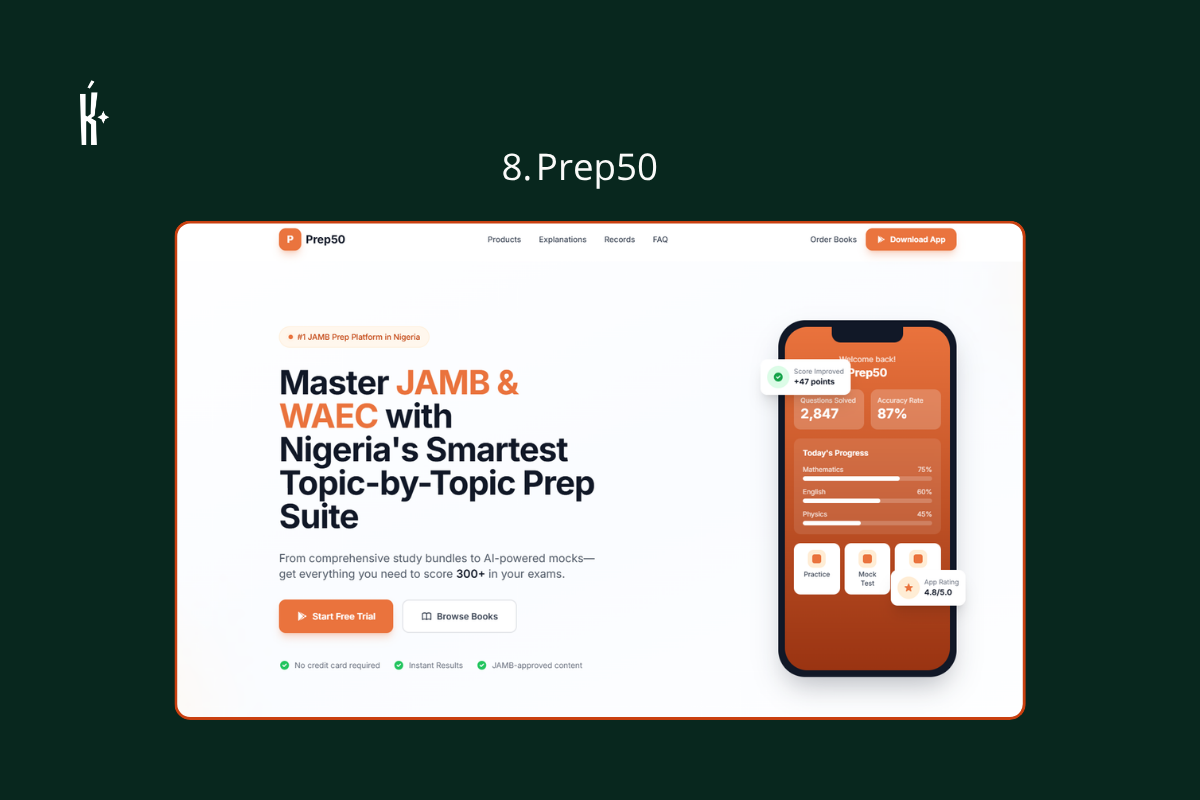
Prep50 is one of Nigeria’s most-used JAMB and WAEC prep apps, built around more than 50,000 past questions and CBT simulations that mirror the actual UTME screen, timing, and on-screen controls, so exam day itself holds no surprises. Its AI layer draws on decades of curated UTME and SSCE data to build a personalised study plan based on where a specific student is actually weak, rather than pushing everyone through the same fixed sequence of topics.
That “verified data only” approach is deliberate. Rather than an AI generating fresh, unverified explanations, Prep50 keeps its AI tethered to real past-question patterns, which matters when the entire value proposition is exam accuracy.
Best for: JAMB and WAEC candidates who want realistic CBT simulation plus an AI study plan built from verified past-question data.
Pricing: Free tier available; premium plans priced in naira in-app.
Try it here: prep50.ng
9. ExamGenie
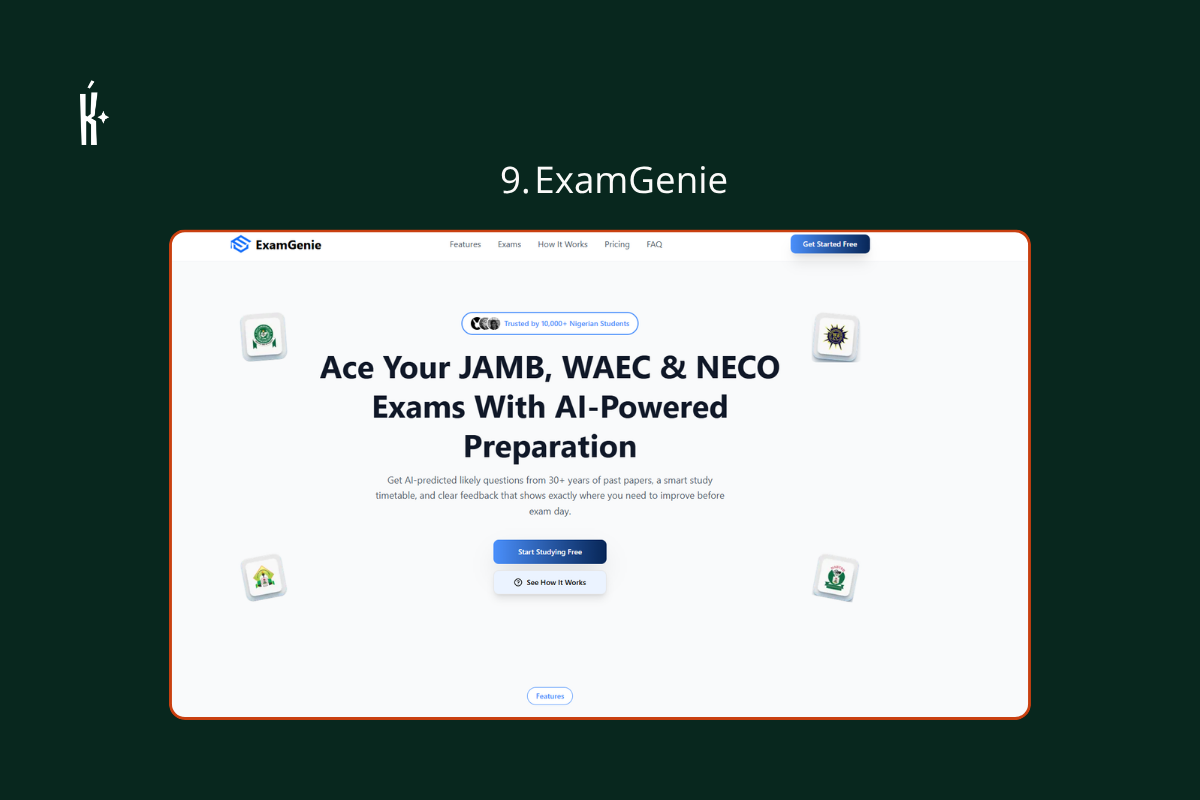
ExamGenie covers more exam bodies than most Nigerian prep apps in one place — JAMB, WAEC, NECO, NABTEB, ICAN, and nursing exams inside the same platform, with over 50,000 verified past questions and step-by-step solutions. Its standout feature is AI-predicted likely questions, built by pattern-matching against more than 30 years of past exam data, alongside score predictions that give a candidate a rough sense of where they would land if the exam were today.
Treat the predictions as a smart way to prioritise revision, not a leaked paper; no tool can guarantee what will appear on the day, and ExamGenie itself frames it as pattern-based, not certain. Used that way, it is a useful triage tool for candidates juggling multiple exam bodies at once.
Best for: Candidates preparing for multiple Nigerian exam bodies (JAMB, WAEC, NECO, ICAN, and more) who want AI-prioritised revision, not just a past-question bank.
Pricing: Free plan with 5,000+ past questions and limited daily practice; premium plans priced in naira for unlimited practice and AI-predicted questions.
Try it here: examgenie.org
10. UniPrep
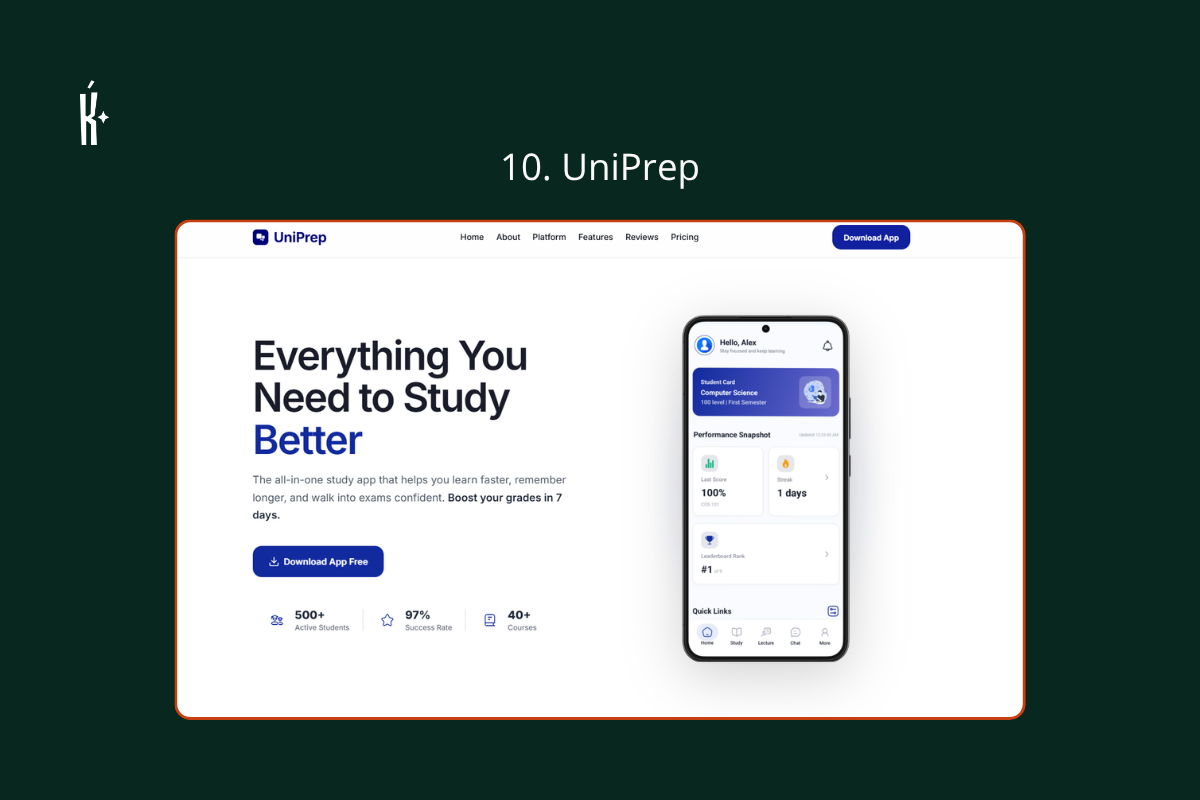
Every tool above assumes you are still preparing to get into university or sitting a professional exam. UniPrep is built for the student already there, staring down a departmental exam with a lecturer’s own past questions, course outlines, and lecture notes to make sense of. It lets you chat directly with your uploaded notes, auto-generates quizzes and flashcards from your actual course material, and includes a GPA calculator and study planner so revision and workload tracking live in one place instead of six different apps and a WhatsApp group.
It is currently built out for Unilorin students, starting from 100 Level, with more Nigerian universities planned. If your school is not covered yet, it is still worth watching; the model, a study app built specifically around one institution’s actual courses and past questions rather than a generic national syllabus, is likely to spread to more campuses as it grows.
Best for: University students who want quizzes, flashcards, and a GPA-aware study planner built from their own department’s course material.
Pricing: Free to start; paid plans include a 7-day free trial.
Try it here: uniprep.ng
Kini Big Deal?
None of these tools sit the exam for you. A predicted-questions feature that nobody actually revises around is just a list, and a study plan that never gets opened after day one is not a plan at all. It is only an app icon collecting dust. What they remove is the specific panic of not knowing where to start: which topic to hit first, what a confusing question is actually asking, whether an essay is exam-ready before it is too late to fix it.
For a UNILAG student mid-semester, a JAMB candidate three months out, or someone cramming ICAN the night before, the honest advice is to pick one tool for the gap you actually have; a planner if you cannot organise your time, a camera solver if specific questions trip you up, a flashcard tool if things do not stick, rather than downloading all ten and using none of them properly. Start with that one, build a habit around it for a fortnight, then add the next tool only if you genuinely still need it.
And whichever you pick sha, remember the tool is there to make your revision sharper, not to replace it.
Sources consulted while drafting: Gauth (gauthmath.com), Photomath, Quizgecko, StudyFetch, RemNote, Scholarly study schedule generator, Grammarly, Prep50, ExamGenie, UniPrep.