
A classroom of forty students moves at one pace, whether or not any single student in it is actually keeping up. A parent helping with homework does not remember how they were taught fractions in 1990, let alone French. A working professional trying to pick up a new skill after a full day’s work has maybe forty minutes and no patience for a course built for someone starting from zero.
Learning has always had this problem: being deeply personal, yet having few tools built to support personal learning. That is changing in 2026. A new generation of AI tools can meet a learner exactly where they are and explain a concept in as many different ways as it takes. It can even adjust in real time instead of marching everyone through the same fixed template.
You do not need all ten of these. You need the one built for how and what you are actually trying to learn.
Here are the ten AI learning tools worth knowing right now.
1. NotebookLM
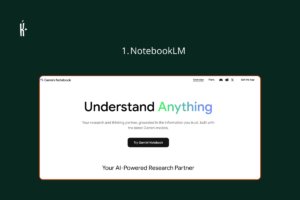
Every research tool helps you find information. NotebookLM starts after that. Instead of searching the web, it asks you to bring your own material: lecture notes, PDFs, books, YouTube videos, meeting transcripts, reports, even entire websites. Once they’re inside, it becomes a personalised tutor that only answers from those sources, with every response linked back to the exact passage it came from. That means you are not learning from a generic explanation pulled from the internet; you are learning from your textbook, your professor’s slides, or your company’s documentation.
Where NotebookLM really separates itself is in how it helps you digest information rather than just retrieve it. It can generate study guides, timelines, FAQs, briefing documents, quizzes, mind maps, and its standout Audio Overviews, which turn your notes into a surprisingly natural podcast you can listen to while commuting or doing chores. It will not replace the effort of actually studying, but it dramatically shortens the distance between reading something and genuinely understanding it. For students, professionals, and lifelong learners trying to make sense of large amounts of information, few tools feel more like having a patient study partner beside you.
Best for: Turning your own notes, textbooks, reports, and documents into personalised explanations, study guides, and interactive learning sessions.
Pricing: Available under Google AI subscriptions.
Try it here: notebooklm.google.com
2. Khanmigo
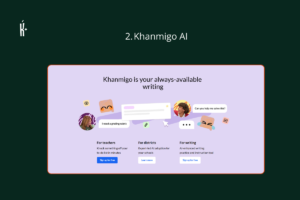
Built by Khan Academy and trained on its enormous library of lessons, Khanmigo does not simply hand a student the answer to a maths or science problem. It adopts the same Socratic approach every good human tutor uses, by asking the student questions. By doing this, it nudges the student toward the answer rather than past the actual learning. This makes it more effective than the lazy approach of handing students the answers to difficult problems.
It is built into Khan Academy’s existing courses, so it already knows the curriculum a student is working through and can reference the exact lesson they are stuck on.
It is built specifically for school-age learners and their teachers, with a version for classroom use that gives teachers visibility into where each student is actually struggling, not just whether they got the final answer right. For any parent, teacher, or after-school programme in Africa looking for a maths and science tutor that scales, this is the most proven option on this list.
Best for: K-12 students and teachers needing Socratic, curriculum-aligned tutoring in maths and science.
Pricing: Free for teachers; $4/ month for parents and learners.
Try it here: khanacademy.org/khan-labs
3. ChatGPT Study Mode
If you already have a ChatGPT account, you already have a capable tutor sitting inside it. Study Mode flips the usual chatbot script: instead of answering your question directly, it asks guiding questions, offers scaffolding, and checks your understanding before moving forward — the same Socratic instinct as Khanmigo, but built to work across any subject, any level, using any model available in ChatGPT. Upload your own lecture notes or textbook chapter, and it will tutor you specifically from that material rather than a generic version of the topic.
It remembers your skill level across conversations, so it does not re-explain what you already know, and it can generate practice quizzes or give a mock grade on a piece of writing before you submit the real thing. It is not built exclusively for school; university students, professionals studying for a certification, and self-directed learners all use it the same way.
Best for: Self-directed learners who want a Socratic tutor across any subject, using their own study material.
Pricing: No standalone fee; available under ChatGPT free and Pro subscriptions
Try it here: chatgpt.com
4. Duolingo Max
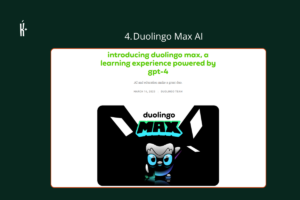
Duolingo built its name on short, gamified, bite-sized language lessons, and Max adds two features on top that change what the app can actually do for you. Video Call puts you in a conversation with an AI character who responds to what you say in real time, and Roleplay drops you into a scenario — ordering food, negotiating a price, checking into a hotel — so you practise the language the way you would actually need it, not just matching words on a screen.
It is still fundamentally a gamified app built around streaks and bite-sized sessions, so do not expect the depth of a dedicated conversation-practice tool. But as an on-ramp that makes a habit out of daily practice and then adds real speaking practice on top, nothing else combines both as well.
Best for: Building a consistent language-learning habit with real conversation practice layered on top.
Pricing: $29.99/ month.
Try it here: duolingo.com
5. Speak
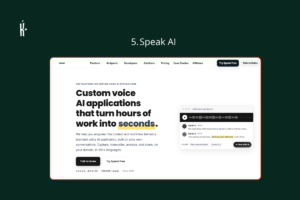
Speak takes the opposite starting point from Duolingo: rather than gamified matching exercises with conversation bolted on, the entire app is built around speaking out loud from lesson one. Short video lessons from native-speaking instructors build a structured curriculum, and the Speak Tutor feature then drops you into open-ended AI conversation practice, correcting your pronunciation, grammar, and tone as you go, powered by a real-time voice engine built with OpenAI.
Currently built for six languages — Spanish, French, Korean, Japanese, Italian, and English — it is a narrower tool than Duolingo but a deeper one for the specific skill of actually speaking confidently, which is usually the part learners find hardest and practise least.
Best for: Learners whose main blocker is speaking confidence, not vocabulary or grammar.
Pricing: Pay-As-You-Goor $20 /month ($240 billed annually)
Try it here: speak.com
6. ELSA Speak
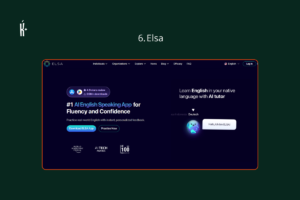
ELSA (English Language Speech Assistant) specialises in one specific problem: the actual mechanics of how words come out of your mouth. Where Duolingo and Speak focus on vocabulary, grammar, and conversation flow, ELSA listens at the phoneme level — the individual sound units inside a word — and tells you precisely which sound you are mispronouncing and how to fix it, trained on voice data across a wide range of accents. Over 7,100 lessons across 22 skill areas break this down methodically.
For non-native English speakers who already understand grammar and vocabulary but want to sound more confident and be understood more easily in professional settings, this is the most precise tool designed to address that gap.
Best for: Non-native English speakers who want to fix specific pronunciation and accent issues for professional settings.
Pricing: $89.99 – $99.99 /year.
Try it here: elsaspeak.com
7. Quizlet
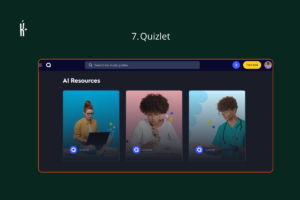
Quizlet has become a full AI study coach. Magic Notes takes learning materials you already have and instantly converts them into flashcards, a practice test, and a clean summary, removing the tedious manual work of building study materials from scratch. Q-Chat, its AI tutor, then works through that same material with you conversationally, asking guiding questions rather than giving answers outright.
It is now also available as an app within ChatGPT itself so that flashcard generation can happen directly in a conversation you are already having. For any student who has ever spent an evening manually typing out flashcards instead of actually studying, this removes that entire step.
Best for: Turning your existing notes or textbook material into flashcards, quizzes, and guided study sessions automatically.
Pricing: $3.75/ month (billed annually)
Try it here: quizlet.com
8. Coursera Coach
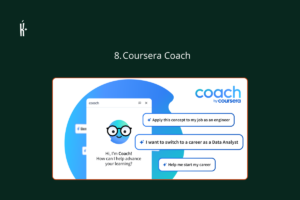
Coursera now has a Coach that serves as a personalised AI guide through any course you’re taking. It can summarise a lengthy video lecture you do not have time to rewatch in full, explain a concept the course itself glossed over too quickly, and answer questions specific to the exact curriculum you are enrolled in, rather than a generic version of the topic pulled from the open internet.
It will not replace the course itself, and it is only useful if you are already learning inside Coursera. But for anyone using the platform to reskill or complete a professional certificate while working full-time, it turns passive video-watching into something closer to guided, active learning.
Best for: Learners working through Coursera courses who want a guide through the specific material, not generic explanations.
Pricing: No standalone fee; available under free Coursera free and paid subscriptons.
Try it here: coursera.org
9. Socratic by Google
Socratic solves a narrower, more immediate problem: a student stuck on a specific homework question, right now, with no tutor around. Point your phone camera at a maths equation, a biology diagram, or a history question, and Socratic, built on Google Lens, pulls together an explanation drawn from curated educational content, covering everything from algebra and chemistry to literature and history.
Because it is a Google product folded into the Google app rather than a standalone subscription business, it remains genuinely free: no premium tier, no paywall on core functionality. It is not built for deep tutoring or ongoing courses; it answers the question in front of you and moves on. But for a student without reliable access to a human tutor after school hours, that is still a meaningful safety net.
Best for: Instant, free help with a specific homework question via a photo, with no subscription required.
Pricing: FREE!
Try it here: Google app → Socratic
10. MagicSchool AI
Every tool above is built around the learner. MagicSchool flips the perspective and builds for the person managing thirty or more of them at once. It gives teachers more than 80 tools inside one workspace: complete lesson plans generated in roughly the time it takes to make a coffee, differentiated worksheets and quizzes, rubrics, parent communication drafts, and even a first pass at an IEP, each customised to a specific grade, subject, and class context.
The honest expectation to set: treat what it generates as a strong first draft, not a finished product — most teachers spend five to ten minutes refining before it is truly classroom-ready. But for any school or training programme in Africa trying to give teachers back their evenings, the platform has scaled fast enough, past 5 million educator sign-ups across more than 160 countries, that it is worth knowing regardless of which side of the desk you sit on.
Best for: Teachers and schools needing fast lesson plans, worksheets, assessments, and classroom materials.
Pricing: $12.99 /month.
Try it here: magicschool.ai
Kini Big Deal?
None of these tools make anyone smarter on their own. A Socratic tutor that nobody engages with honestly is just an answer key with extra steps, and a lesson plan generated in thirty seconds still needs a teacher who knows their own classroom to make it land.
What they actually do is remove the excuse of “there was no one around to explain it to me.” A student stuck on a maths problem at night, a professional trying to learn French before a trip, a teacher drowning in lesson prep for five different classes — all had, until recently, one option: wait, or go without. For African students, teachers, and lifelong learners building skills without a personal tutor on call, that is the actual shift. Not smarter learning, sha, but learning that is finally available whenever you are ready for it.
Pick the one built for your actual gap, not the most popular name on the list. A tutor for concepts, a specialist for the one subject giving you trouble, a coach for the language you are trying to speak with confidence. Start with one, build the habit, then add the next.