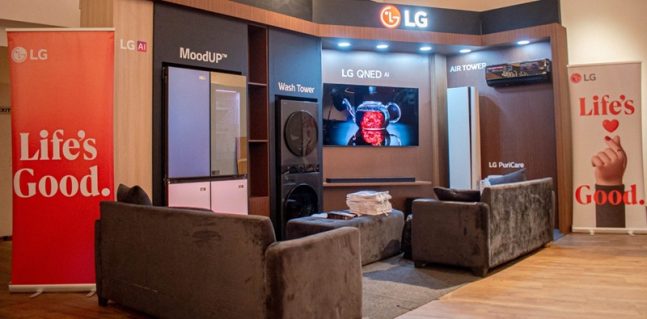

Most conversations about AI in Africa focus on apps, chatbots, and data centres. At the Africa Technology Expo 2026 in Lagos, LG Electronics made a different argument: AI has already moved into the home itself. It is in the refrigerator, the air conditioner, the television, the washing machine. It is not a feature; it is the operating system of the house.
LG’s showcase at the Expo was built around the central idea that every device in the home is now a node in an AI network. The refrigerator does not just keep food cold; it learns your household’s usage patterns and adjusts its cooling accordingly. The air conditioner does not just respond to the temperature you set; it reads the environment and optimises itself. The television does not just display an image; its AI upscales picture quality in real time, scene by scene, frame by frame. LG’s ThinQ AI platform ties all of it together, learning across devices and making the home smarter the longer you live in it.
This is what AI looks like when it leaves the tech sector and enters everyday life.
Major Highlights
- LG Electronics showcased a fully AI-integrated home ecosystem at the Africa Technology Expo 2026 in Lagos: Every product on display runs on LG ThinQ AI, the company’s on-device intelligence platform that connects and learns across appliances.

- The QNED television range uses AI to analyse each scene and upscale picture quality in real time, adjusting colour, contrast, and clarity frame by frame without manual input.
- The MoodUP™ refrigerator uses AI-powered adaptive cooling, learning household usage patterns over time to maintain optimal temperatures more efficiently, not just responding to a static setting.
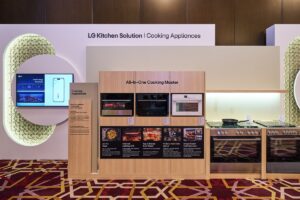
- The ARTCOOL air conditioner and LG Air Tower use AI climate sensing to optimise airflow and energy consumption, reducing costs without sacrificing comfort.
- The LG WashTower automates laundry cycle selection based on load type and fabric; another case of AI making a daily decision that previously required human judgment.
- LG’s Managing Director for West Africa, H.S. Ji, framed the strategy explicitly: “innovation goes beyond creating advanced products — it’s about developing meaningful solutions that improve everyday life” — positioning AI not as a premium add-on but as the baseline.
- The Expo has historically generated approximately $192 million in transactions, making LG’s presence a commercial statement, not just a brand exercise
KINI BIG DEAL
What LG brought to The Expo is telling us that AI has already crossed the threshold from the tech industry into the home. This is not AI in a server farm in Virginia. This is AI in a Lekki apartment making decisions about your electricity consumption at 2am while you are asleep. That shift is significant, and most of the African conversation about AI has not caught up with it yet.
The thing to understand about on-device AI is that it does not stop working when your internet goes out. The MoodUP fridge’s adaptive cooling is not pinging a Google server every time it adjusts. The ARTCOOL AC’s climate intelligence is running locally. For locations in Africa where power and connectivity remain inconsistent, that really matters. AI that depends entirely on a stable cloud connection is AI that keeps failing you. AI baked into the hardware is a different proposition.
Read more: Punch — LG eyes Africa growth with AI-powered home solutions | The Guardian — Firm showcases AI-powered smart home solutions at Africa Technology Expo