
Walk through any market in Lagos or Nairobi and you will find the same thing: a trader holding a phone, managing orders on WhatsApp, posting products on Instagram, trying to keep track of what sold and what is still in stock, all in their head, across three different platforms, with no data, no analytics, and no way to know if their business is actually growing.

That is how most of Africa’s eCommerce works. The continent’s online shopping market is worth over $55 billion and is projected to reach $112 billion by 2029. But most of the people driving that market are doing it from their phones, without a proper digital storefront, because the tools that exist were not built with them in mind.
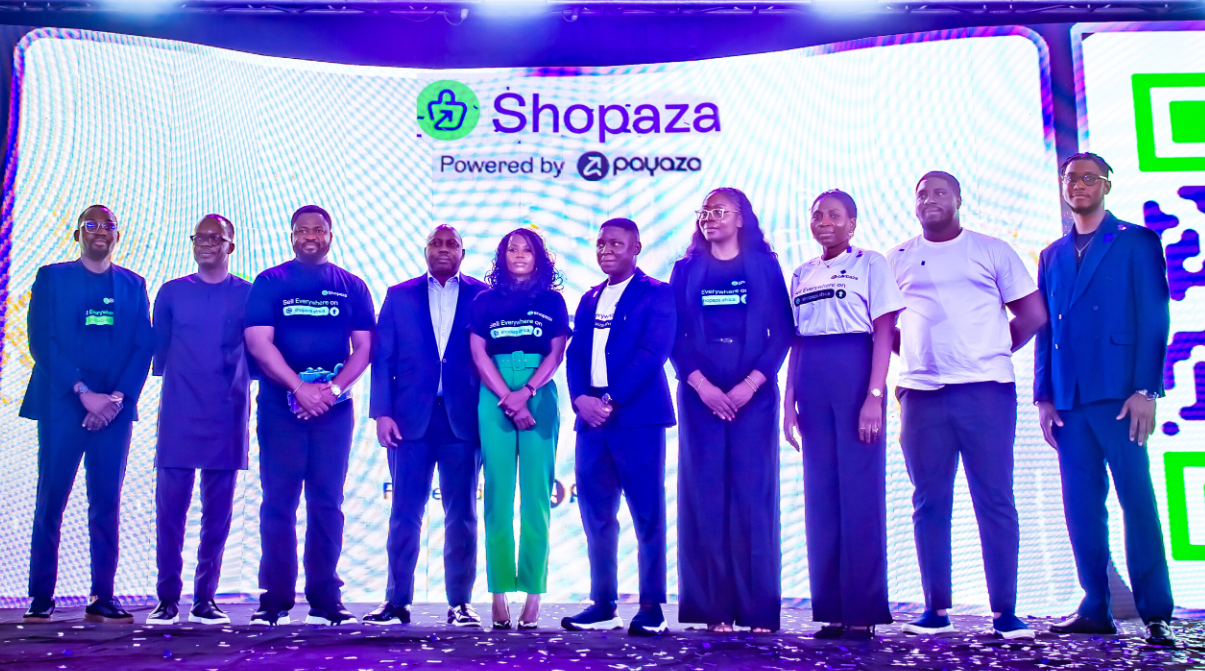
Payaza, a Pan-African fintech company, launched Shopaza in Lagos on June 18 to change that. The idea is simple: give African merchants and diaspora sellers a real digital store, built on a payment system that already works, with AI doing the heavy lifting on setup.
Major Highlights
- Payaza launched Shopaza, an AI-powered eCommerce platform for small businesses, on June 18, 2026 in Lagos.
- Shopaza is live across 23 countries — in Africa, North America, and Europe — targeting both African merchants and diaspora sellers.
- The platform runs on Payaza’s own payment infrastructure, allowing instant settlement — a major advantage over platforms that depend on third-party payment processors and slower payout timelines.
- The headline feature: an AI store builder — merchants drop a product image, and the AI automatically sets a competitive price, populates product descriptions, and adds size, colour, and variation details, requiring no manual entry.
- Stores on Shopaza are fully customisable, with multiple templates for physical products, digital products, and bookings — unlike most eCommerce platforms that give every store the same look.
- The core problem Shopaza addresses: merchants selling on social media have no data on who bought what, no inventory management, and no way to see which products are performing: just messages, bank transfers, and guesswork.
KINI BIG DEAL
The social media storefront is one of the most creative workarounds the African entrepreneurial spirit ever invented. Africans turned Instagram DMs and WhatsApp broadcast lists into legitimate sales channels before most of the world’s eCommerce platforms even knew those markets existed. The ingenuity is real.
But ingenuity and infrastructure are two different things. A business that cannot see its own data cannot grow beyond what one person can hold in their head. You cannot restock intelligently if you do not know what sold. You cannot plan marketing if you cannot see when your customers are active. You cannot expand if your entire business lives in three apps on a phone that could get stolen tomorrow.
What Shopaza is offering — especially the instant settlement piece — is not just convenience. It is cash flow. In Nigerian business, the gap between “the customer paid” and “the money is in my account” can mean you cannot restock, cannot pay your supplier, cannot keep the operation running. Payaza’s in-house payment infrastructure closing that gap is the kind of practical detail that makes the difference between a merchant who scales and one who stays stuck.
The AI store builder is also worth pausing on. For a first-time digital merchant, setting up a proper eCommerce store has always meant navigating templates, writing product descriptions, researching pricing, and uploading images — hours of work that a trader with twenty products and a market stall to run simply does not have. Dropping a photo and letting the AI handle the rest is not a gimmick. For the right merchant, it is the difference between signing up and giving up.
Read more: Techpoint Africa — Payaza launches Shopaza, integrates AI to simplify eCommerce
Until next time, stay curious.